Clearance testing in Bellevue is the independent look that follows mold removal: no visible growth, no settled debris inside containment, dry materials, and lab samples where they add proof. It belongs before new drywall, insulation or flooring goes in. Call the number on this page to be connected with a local mold inspector in Bellevue.
How the process usually runs once you call
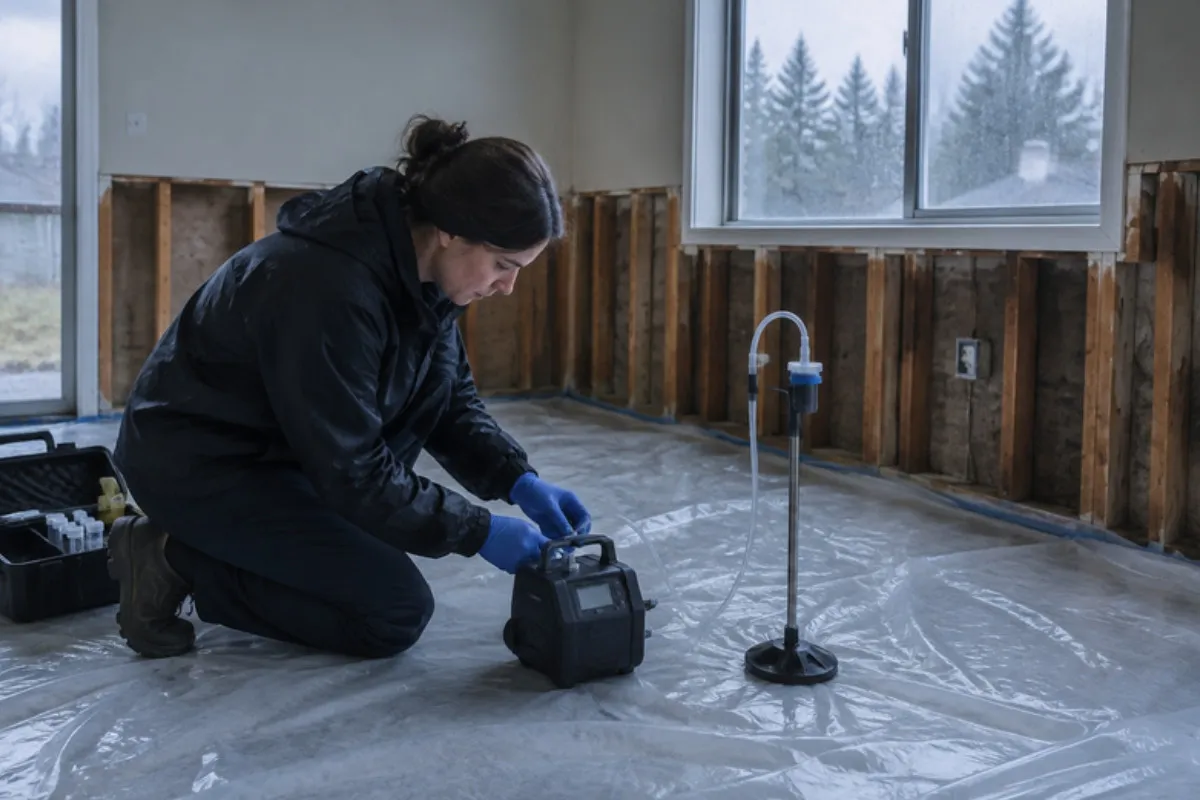
The call connects you with an independent local assessor. A good one starts by asking for the remediation scope: which rooms, which materials came out, where the moisture came from, and what the contract says counts as a pass. From there the visit typically goes in this order:
- A walk-through of the containment with a flashlight, looking for remaining growth, dust on ledges and debris on the floor.
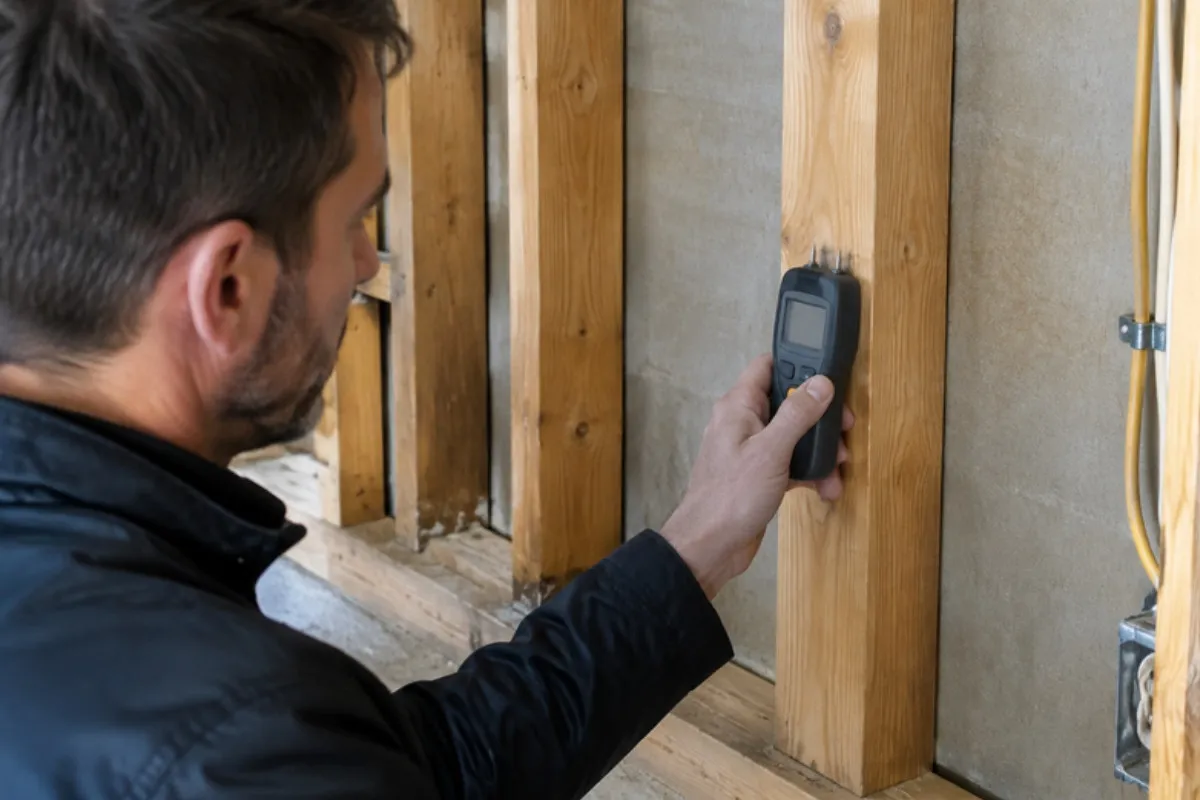
- Moisture-meter readings on studs, plates, sheathing and subfloor.
- Surface or air samples where the job size or your paperwork needs call for them, with an outdoor or unaffected-room comparison for air.
- A written pass or fail with photos, readings and lab results.
What drives the cost
Angi's 2026 national data puts a typical mold inspection at $303-$1,044, and that is a reasonable guide for clearance because the work is similar. Sample count matters most. Angi lists a basic air test at $250-$350 and surface or swab sampling at $200-$300 nationally. A one-bathroom job may need only a visual check and moisture readings; a basement suite or several bedrooms with lab samples costs more. Access matters too, especially tight crawl spaces or high-rise units where the assessor has to coordinate building entry.
Local conditions that matter in Bellevue
Bellevue sits between Lake Washington and Lake Sammamish, with Mercer Slough just south of downtown and much of the city draining through the Kelsey Creek watershed. The city recommends flood insurance even outside mapped floodplains, because standard homeowner policies generally exclude outside water, and it posts FEMA flood maps and a list of elevation certificates residents can check. The median Bellevue house was built around 1981, so many homes are old enough for tired roofs, aging window seals and original bath fans, the usual sources of hidden moisture behind a mold job. Condo and townhome owners should also find out whether the association or the owner is arranging clearance, since a shared wall may be involved.
Before the assessor arrives
- Leave containment and air scrubbers running unless the assessor says otherwise.
- Have the remediation scope, invoice and any moisture logs ready.
- Do not wipe or vacuum inside the work area yourself.
- Know where the original leak was and how it was fixed.
- If drywall or other repairs come next, ask the Bellevue Development Services Permit Center which work needs a permit.
Post-Remediation Clearance Testing questions in Bellevue
Is a visual check enough, or do I need lab samples?
Should containment stay up until clearance passes?
Why do air samples at clearance need an outdoor comparison?
Do I need a permit to rebuild after clearance?
More mold services in Bellevue
Post-Remediation Clearance Testing nearby
Sources
- Angi: How Much Does a Mold Inspection Cost? (2026 data)
- Angi: How to Hire a Mold Remediation Company (separate testing and remediation)
- EPA: Mold Information Slideshow (testing and sampling)
- City of Bellevue: Flood protection
- City-Data: Bellevue housing
- Wikipedia: Bellevue, Washington
- City of Bellevue: Permits
Last updated: