Attic mold in Seattle usually comes from warm, moist house air reaching cold roof sheathing during the long wet season, often through bath fans that vent into the attic, gaps around light fixtures, or blocked roof vents. Removal means fixing the airflow or moisture problem, cleaning or replacing affected sheathing, and replacing wet insulation. Call the number on this page to be connected with a local mold remediation company in Seattle.
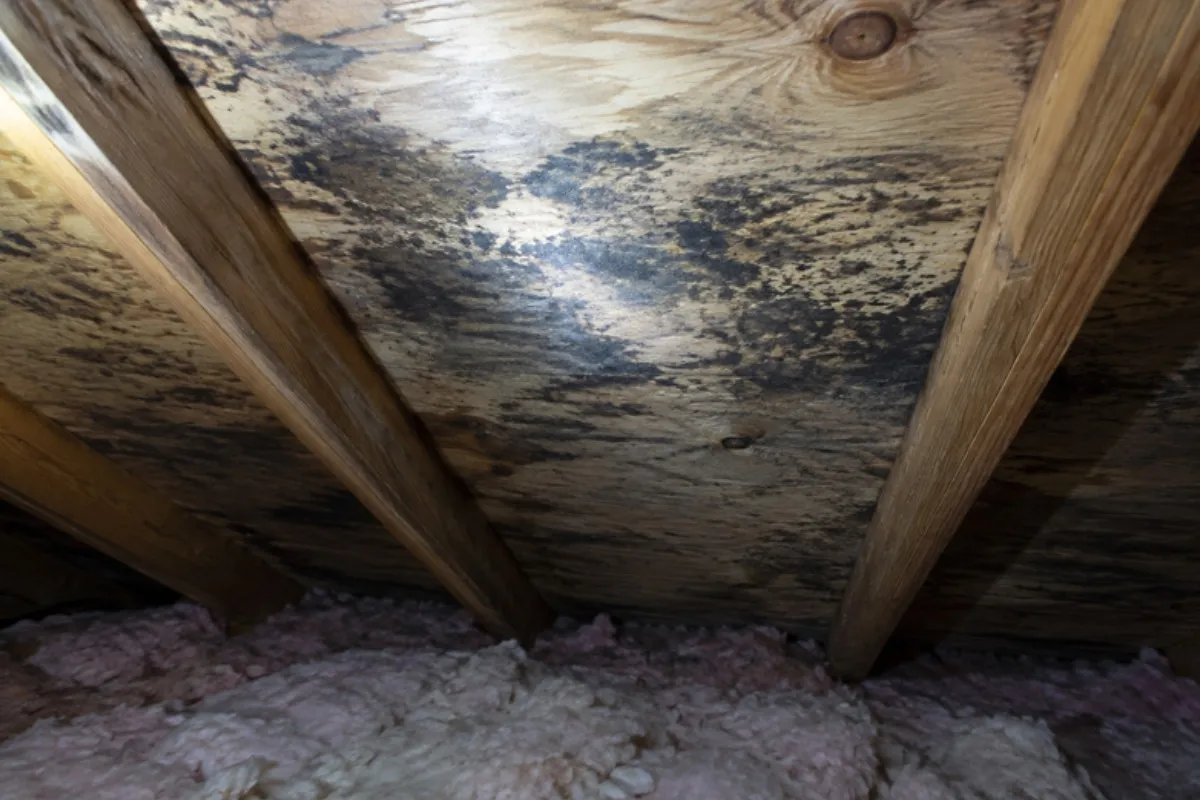
How Seattle attics get moldy without a roof leak
A lot of attic mold here shows up in houses with a sound roof. In winter the sheathing stays cold for months, and any humid indoor air that reaches it condenses on the wood. With few dry days between October and April, the plywood never fully dries out. The result is gray or black staining spread evenly across the underside of the roof, often worst on the north-facing slope that gets the least sun.
The usual sources of that moist air:
- Bathroom or kitchen fans ducted into the attic instead of through the roof or wall, or ducts that have come apart.
- Gaps around recessed lights, the attic hatch and plumbing penetrations that let house air rise.
- Soffit vents covered by insulation, so there is no air path from eave to ridge.
- Actual leaks at flashing, chimneys or skylights, which show as concentrated stains rather than an even pattern.
Questions to ask whoever inspects it
- Is the moisture source condensation, a leak or both, and how do you know?
- Is the sheathing still structurally sound, or does any of it need replacing?
- Will the insulation need to come out?
- Who fixes the venting and air sealing, and is that in the price?
If you can see the growth, EPA says lab sampling is usually unnecessary. Some homeowners still prefer an independent assessment so the company that writes the scope isn't the one doing the work; Angi recommends separate companies for testing and remediation, though Washington doesn't require it.
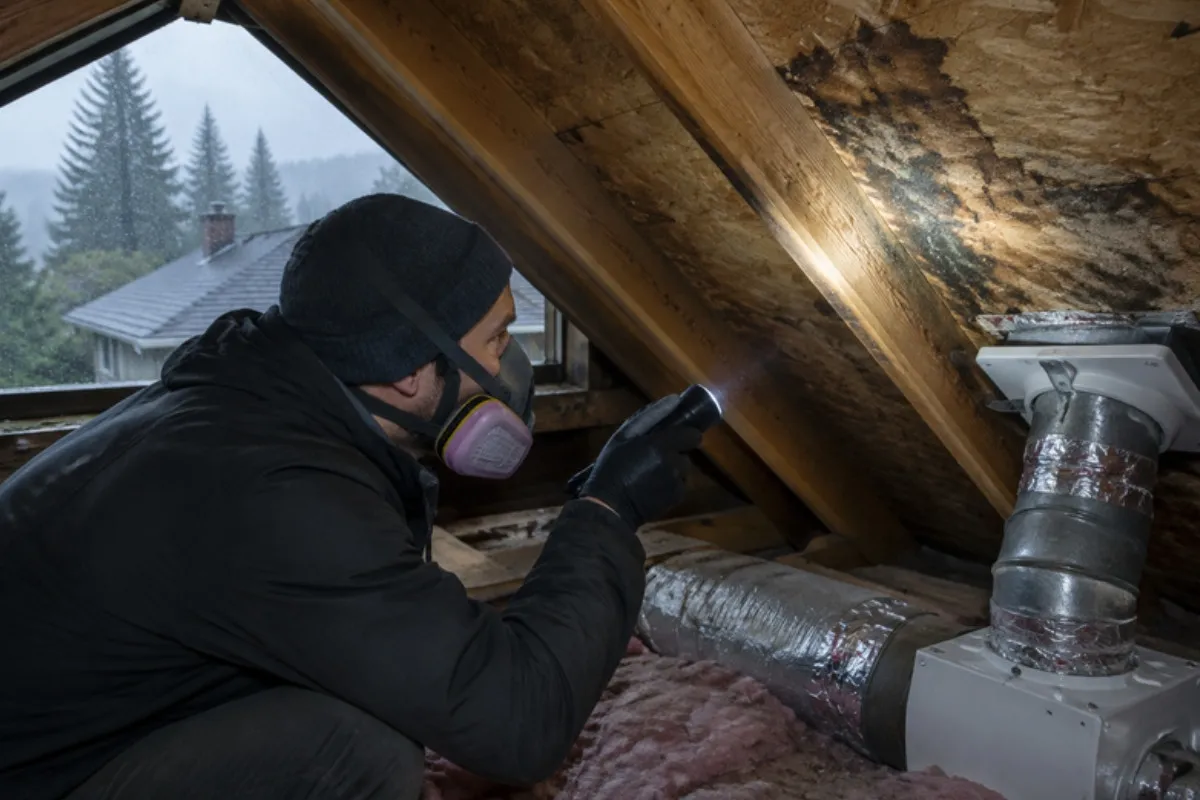
What removal involves
- Correct the moisture first: reroute fan ducts outdoors, air seal the ceiling below, clear soffit vents and fix any leak.
- Seal the attic hatch so disturbed spores don't drop into the rooms below.
- Remove wet or moldy insulation; it is porous and usually can't be saved.
- Clean the sheathing and rafters, commonly by HEPA vacuuming, scrubbing or media blasting. Damaged sheathing gets replaced. EPA cautions against coating or painting over growth as a substitute for cleaning.
- Reinsulate once the wood reads dry.
Cost ranges
| Source | Attic mold removal |
|---|---|
| Angi's Seattle cost guide | $825 to $3,300 |
| HomeGuide national range (2026), partial attic | $1,500 to $6,000 |
| HomeGuide national range (2026), full attic | $6,000 to $15,000 |
The total depends on attic size and access, how much insulation comes out, and whether ventilation or roofing work is added. Before hiring, confirm the company is registered with Washington L&I as a construction contractor on L&I's Verify tool, and get the scope in writing.
Attic Mold Removal questions from Seattle homeowners
Does attic mold mean I need a new roof?
Why is the mold worse on one side of my attic?
Can attic mold get into my living space?
Will cleaning the attic stop the mold from coming back?
Related mold services in Seattle
Attic Mold Removal in nearby cities and towns
King County
Snohomish County
Pierce County
Kitsap County
Island County
Mason County
Jefferson County
Sources
Last updated: