Mold inside a wall almost always traces back to water: a slow plumbing drip, rain getting past siding or a window, or condensation on a cold exterior wall. Damaged drywall and insulation usually have to be cut out, the framing cleaned and dried, and the leak fixed before the wall is closed. Call the number on this page to be connected with a local mold remediation company in Seattle.
Clues that point inside the wall
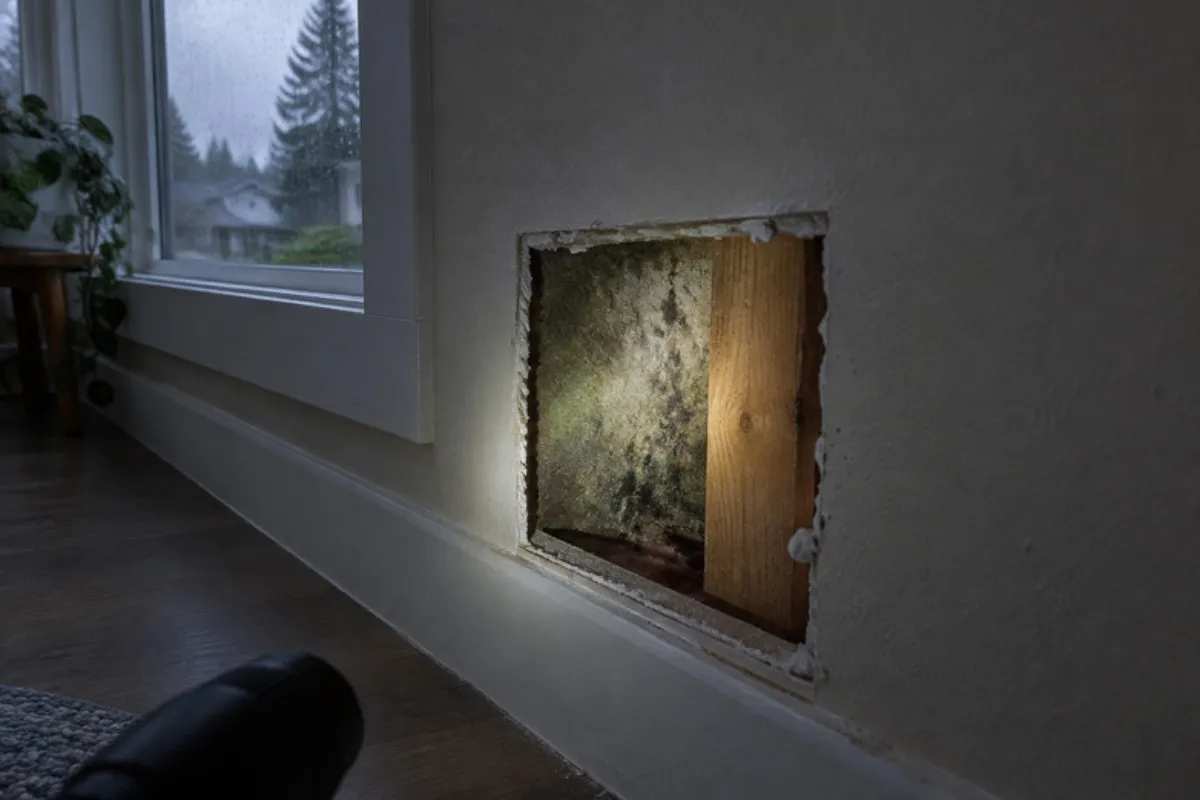
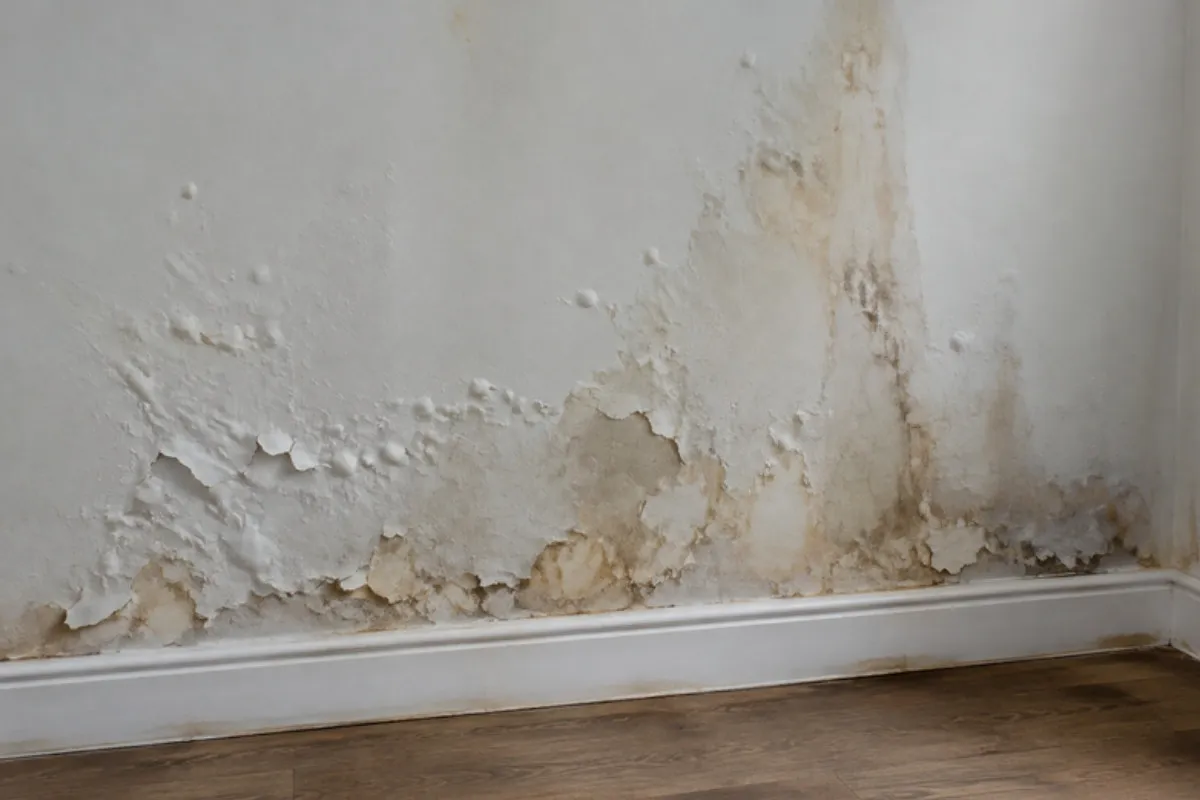
Wall mold rarely shows itself all at once. In Seattle homes the usual hints are a musty smell that is strongest near one wall, paint that bubbles or peels, a brown ring on drywall below a window, baseboards that swell, or drywall that feels soft or cool and damp when you press it. Black spots on the face of the wall in a bedroom corner every winter are often condensation, while a stain that grows after rainy weekends suggests water coming in from outside.
Where the water usually comes from
- Plumbing walls: supply lines and drains behind showers, tubs, sinks and washing machines. These leak year-round, not only in the rainy season.
- Window and siding leaks: months of steady rain from October to April find small gaps in flashing, trim and older wood windows.
- Cold exterior walls: warm, moist indoor air meets a poorly insulated wall behind furniture or a closet, and moisture condenses where air does not move.
- Below-grade walls: daylight basements cut into hillsides can wick groundwater through the foundation into finished walls.
How the wall gets opened and checked
A good inspector starts with a moisture meter and, often, an infrared camera to map wet areas before cutting anything. Small inspection holes or removing a baseboard can confirm what is behind the surface. EPA says porous materials such as drywall and insulation may have to be thrown away when moldy, and that painting or caulking over mold does not fix it. Expect the company to cut drywall a margin past the visible damage, bag it inside the work area, and clean the studs and sheathing.
Fix the water before you rebuild
EPA is plain on this point: if the moisture problem is not fixed, mold comes back. Ask who is repairing the leak. A plumber, roofer or siding contractor may need to come in between demolition and reconstruction, and the wall cavity should be confirmed dry with a meter reading before new insulation and drywall go up. If the cause is condensation, the fix may be insulation, better bath fans or running heat more evenly through the winter.
What it costs
Angi's Seattle cost guide reports a very wide range for wall mold, about $825 to $16,550, because one small section behind a sink and a full run of exterior wall are very different jobs. Replacing drywall afterward runs about $825 to $2,400 in the same guide. Price depends on how many linear feet are opened, whether insulation and sheathing are affected, and how much finish work is needed. Anyone doing the repair work should be registered with Washington L&I as a construction contractor; check on L&I's Verify a Contractor tool.
Mold in Walls & Drywall questions from Seattle homeowners
Can mold grow inside a wall without showing on the surface?
Do I need mold testing to find mold in a wall?
Can I just paint over mold on drywall?
Why does the same bedroom wall get moldy every winter?
Related mold services in Seattle
Mold in Walls & Drywall in nearby cities and towns
King County
Snohomish County
Pierce County
Kitsap County
Island County
Mason County
Jefferson County
Sources
Last updated: