Black or dark-colored mold is removed the same way as any other mold: stop the moisture that feeds it, clean or cut out what is growing, and dry the area so it stays dry. Color alone doesn't tell you how risky a mold is, so the size of the patch, where it is and how long it has been wet matter far more. Call the number on this page to be connected with a local mold remediation company in Seattle.
Why color isn't the question to ask
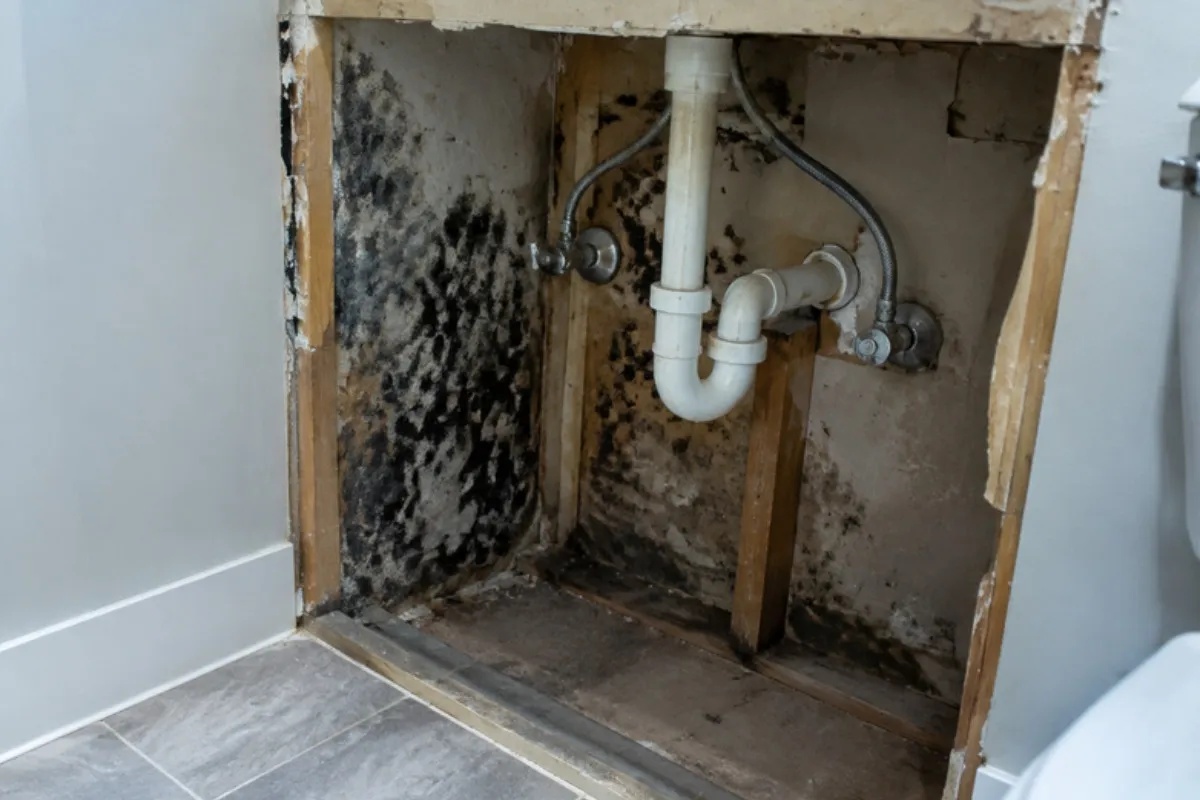
Many molds look black, dark green or gray. A dark patch on a bathroom ceiling and a dark patch on wet subfloor can be completely different organisms, and you can't tell which from a photo. EPA says that when mold is visible, sampling to identify it is usually unnecessary, and there are no federal limits to compare a lab result against. What should drive your decision is how much there is, what it is growing on, and whether the water feeding it has been fixed.
Washington DOH puts the line at roughly 10 square feet, about a 3 ft by 3 ft patch. Below that, a homeowner can usually handle cleanup. Above it, or when the growth is hidden inside walls or mixed with sewage, DOH suggests bringing in a professional.
Where dark mold turns up in Seattle houses
- Window sills and the wall below them, after a winter of condensation running down cold glass.
- Exterior walls behind beds, couches and closets, where air doesn't move during the long damp season.
- Crawl space joists and the underside of subfloor in older homes with vented crawl spaces.
- Drywall and carpet in hillside daylight basements where groundwater seeps through the foundation.
- Roof sheathing in attics where a bath fan dumps moist air instead of venting outdoors.
How removal usually works
- Find and fix the source. A leak, seepage, condensation or a bad vent. If that step is skipped, the mold returns.
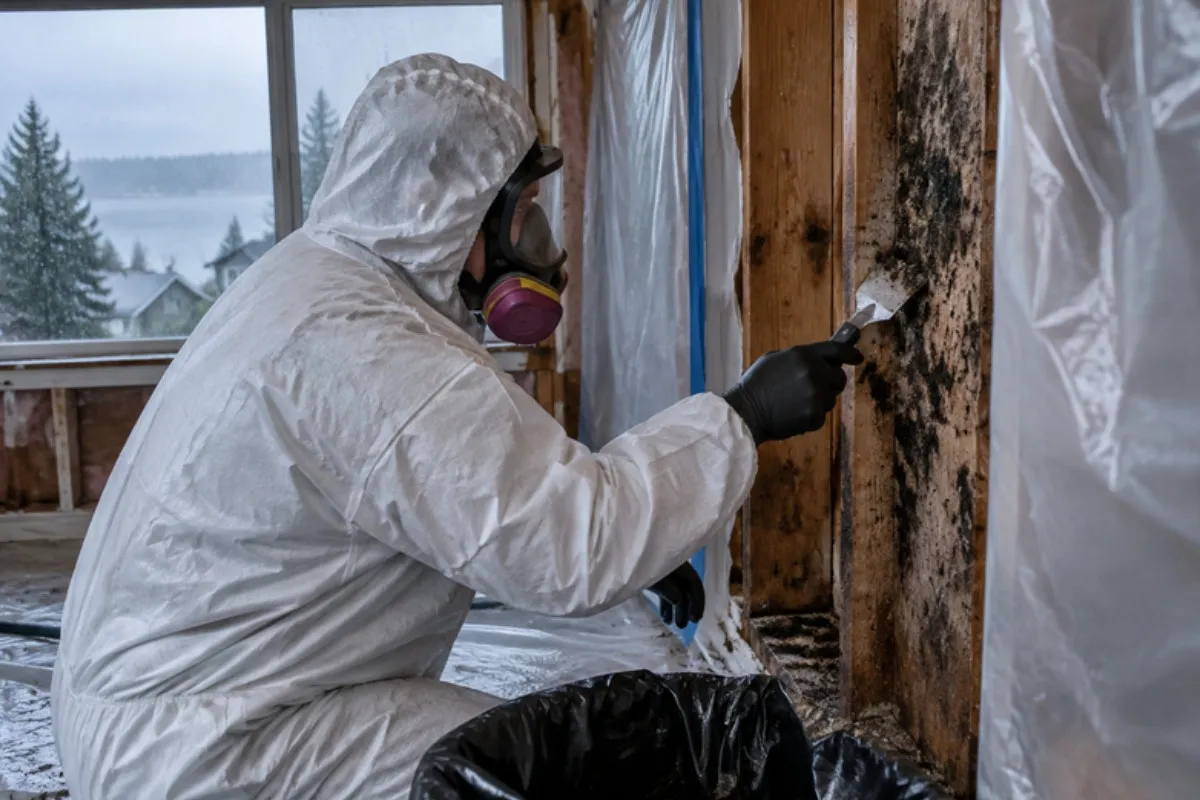
- Contain the area. Plastic sheeting and negative air keep disturbed spores out of the rest of the house. If the HVAC system may be contaminated, EPA says not to run it.
- Remove porous material. Moldy drywall, insulation and carpet are usually cut out and bagged rather than cleaned.
- Clean what can stay. Framing and other solid surfaces are typically HEPA vacuumed and scrubbed. EPA warns against painting or caulking over mold.
- Dry and verify. Moisture readings should be normal before anything is closed back up.
Checking the company first
Washington has no state mold license or certification, according to DOH, so anyone can advertise black mold removal. What the state does require is that anyone doing repair work on a building be registered with Washington L&I as a construction contractor. Look the business up on L&I's Verify a Contractor tool, and get the scope and price in writing. IICRC training is a voluntary credential worth asking about.
What it may cost
Angi's Seattle cost guide puts mold remediation at about $1,008 to $2,967 for a typical job, with a bathroom at $425 to $825 and a wall at $825 to $16,550. Dark color doesn't change the price. Square footage, access, how much material is removed, and repairs afterward do.
Black Mold Removal questions from Seattle homeowners
Is black mold more dangerous than other mold?
Should I have the black mold tested to find out what it is?
Can I clean a small patch of black mold myself?
How do I know a black mold removal company is legitimate in Washington?
Related mold services in Seattle
Black Mold Removal in nearby cities and towns
King County
Snohomish County
Pierce County
Kitsap County
Island County
Mason County
Jefferson County
Sources
- EPA: Mold Information Slideshow (testing and sampling)
- EPA: Mold Cleanup in Your Home
- Washington State Department of Health: Mold
- Washington State Department of Health: Hiring a Contractor (indoor air)
- Washington L&I: Register as a Contractor
- Washington L&I: Verify a Contractor
- Angi: Mold Remediation Cost in Seattle
Last updated: