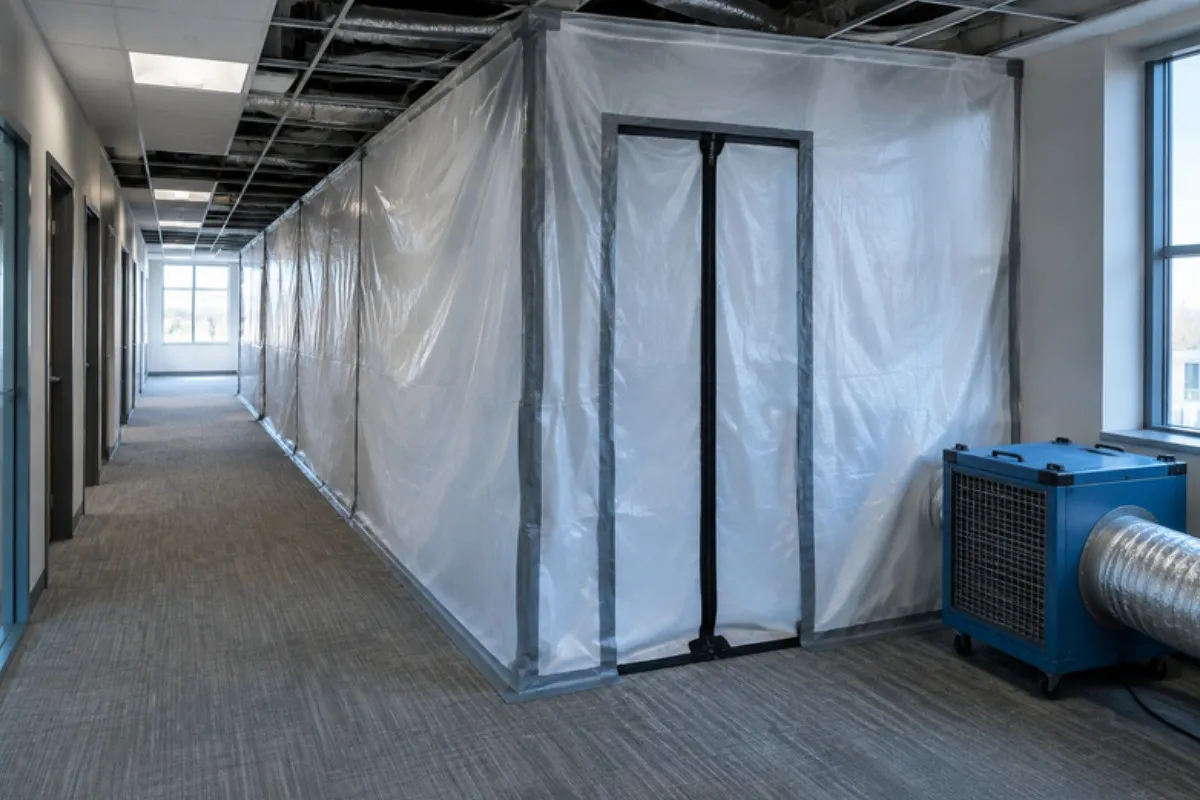
Commercial mold remediation means cleaning up mold in a building that other people rely on, so the work needs a written scope, containment matched to the size of the problem, and a plan for occupants and shared air. EPA publishes separate guidance for schools and commercial buildings that experienced remediation companies work from. Call the number on this page to be connected with a local mold remediation company in Seattle.
Typical Seattle commercial calls
Fewer than half of Seattle homes are owner-occupied, so much of the city's mold work happens in multifamily buildings rather than single houses. Common situations include:
- Apartment and condo buildings where one unit's leak has crossed into a neighbor's wall or ceiling
- Older brick and wood-frame buildings in areas like Capitol Hill or Queen Anne with roof, parapet or window leaks after a long rainy stretch
- Shops, studios and warehouses near the Duwamish Waterway or Ship Canal with damp slab floors or water intrusion at grade
- Offices, clinics, churches and schools with stained ceiling tiles or a musty mechanical room
Step one: a written scope
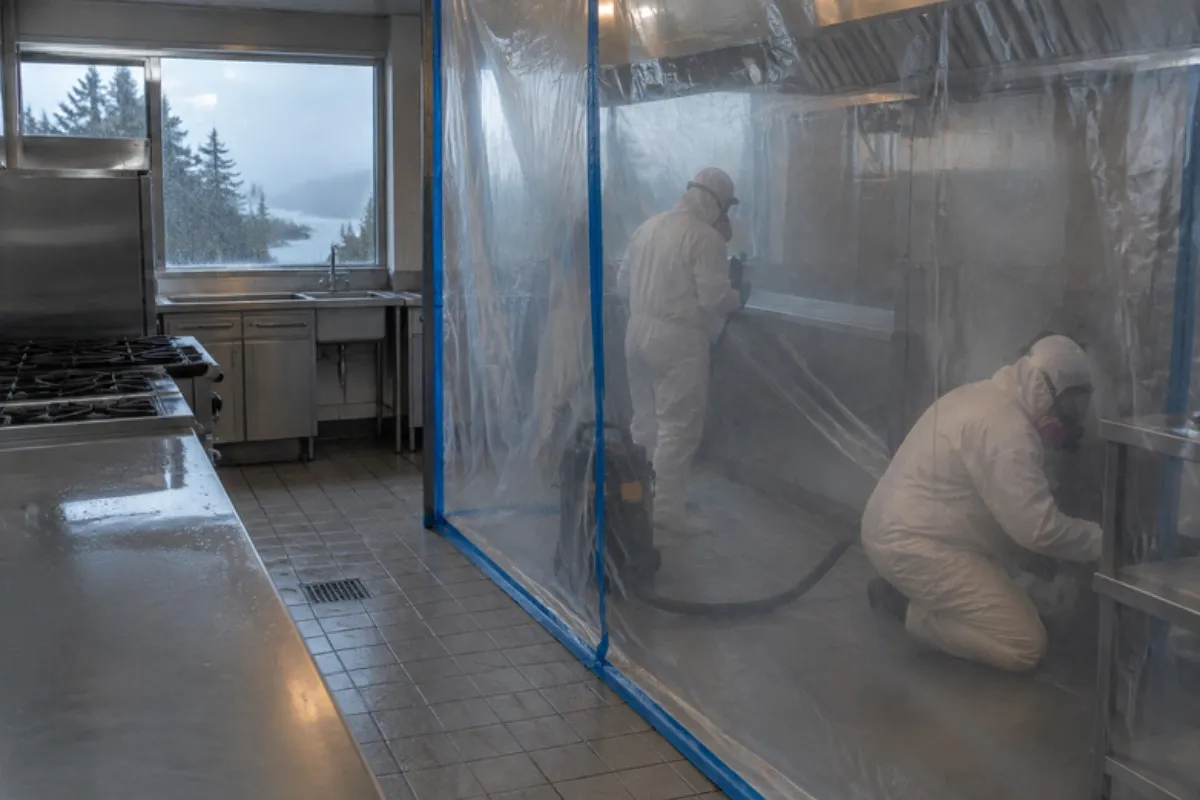
Before any work, ask for a document that measures the affected area, names the materials coming out, explains how the area will be isolated, and states how the company will show the job is finished. EPA's commercial guide groups jobs by size, roughly under 10 square feet, 10 to 100, and over 100, with stronger containment and protective equipment as size goes up. It also notes that judgment matters: dense growth in a small room can be worse than scattered spots across a large one.
Shared air and building systems
EPA says not to run an HVAC system you know or suspect is contaminated, because it can spread mold through the building. In an office or apartment building with central air handling or shared exhaust, that is a decision for the owner and facilities staff before demolition begins. Few Seattle buildings rely on central cooling, but ventilation systems, rooftop units and corridor supply air still need to be checked.
Occupants, notice and rental rules
Tell occupants what is happening, which areas are closed and for how long, and plan around anyone with asthma or a weakened immune system, who EPA says should stay away from moldy areas. Seattle rental buildings fall under SDCI's Rental Registration and Inspection Ordinance, whose checklist looks for weathertight, damp-free buildings, working bath fans and no leaking plumbing. Washington landlords must also give tenants DOH-approved mold information and start repairs within set times after written notice. This is general information, not legal advice.
Bids, registration and clearance
Commercial jobs are bid per project. Angi's Seattle cost guide, about $10 to $25 per square foot, reflects residential work, so treat it only as a rough reference. After-hours scheduling, lifts or ceiling access, HVAC cleaning and the amount of build-back all raise the price. Washington has no state mold license, so check that each bidder is registered with L&I as a construction contractor, get bids in writing, and consider an independent assessor to confirm the area is clean before rebuilding.
Commercial Mold Remediation questions from Seattle homeowners
Is there a Washington license for commercial mold remediation?
Do tenants or staff have to move out during the work?
Does Public Health - Seattle & King County inspect mold in buildings?
How do we know the commercial cleanup is finished?
Related mold services in Seattle
Helpful guides
Commercial Mold Remediation in nearby cities and towns
King County
Snohomish County
Pierce County
Kitsap County
Island County
Mason County
Jefferson County
Sources
- EPA: Mold Remediation in Schools and Commercial Buildings (pdf)
- EPA: Mold Cleanup in Your Home
- Angi: Mold Remediation Cost in Seattle
- Washington State Department of Health: Hiring a Contractor (indoor air)
- Washington L&I: Verify a Contractor
- RCW 59.18.060: Landlord duties
- RCW 59.18.070: Landlord failure to carry out duties
- Seattle SDCI: RRIO inspection checklist (pdf)
- Public Health - Seattle & King County: Mold
- Angi: How to Hire a Mold Remediation Company
Last updated: