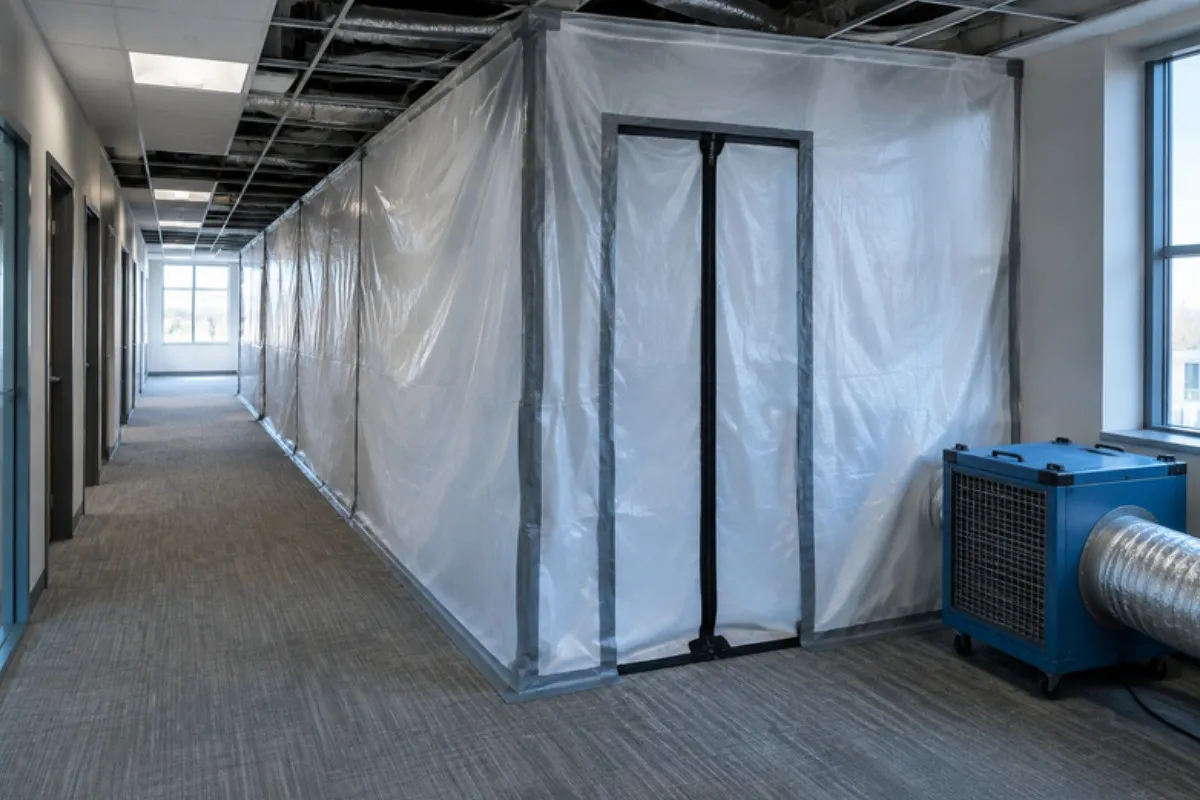
Everett's commercial mold work ranges from riverfront and tideflat buildings hit by high water to offices and apartment complexes with roof leaks and winter condensation. Remediation means containing the area, removing what cannot be cleaned, and confirming the space is dry before rebuilding. Call the number on this page to be connected with a local mold remediation company in Everett.

Everett conditions behind commercial mold
Everett is the Snohomish County seat and a major employment center about 22 miles north of Seattle, built on a peninsula at the mouth of the Snohomish River along Port Gardner Bay. The median home in the city was built around 1980, and plenty of commercial and apartment buildings have similar decades of wear. Water reaches buildings here from several directions. During the December 2025 atmospheric river flooding, Everett Public Works prepared to close Riverfront Boulevard in North Everett, crews sandbagged the Water Pollution Control Facility, Rotary Park and Langus Riverfront Park closed, the animal shelter on Smith Island shut down, and Ebey Island residents evacuated. In late December 2022, king tides flooded W Marine View Drive along the bay.
Clean in place or remove and replace?
| Material | Usual approach | Why |
|---|---|---|
| Metal racking, glass, sealed concrete | Clean and dry | Nonporous; mold stays on the surface |
| Wood framing and structural members | Clean, dry and verify moisture | Semi-porous but usually salvageable |
| Drywall, insulation, ceiling tile | Remove and replace | EPA says porous materials may have to be discarded once moldy |
| Carpet and pad | Usually removed | Holds moisture and growth below the surface |
| Ductwork and air handlers | Inspect, then clean or replace | EPA warns contaminated systems spread mold |
Signs worth acting on
- A musty smell when the heat first comes on in fall
- Staining that spreads on ceiling tile after each storm
- Water lines or swelling at the base of walls after river or tide flooding
- Repeated tenant complaints about one stack of apartments
- Dark growth on stored paper, cardboard or furniture in back rooms
Timing and seasonal notes
Flood risk peaks in late fall and winter, when atmospheric rivers raise the Snohomish and king tides push water up the bay. After high water, the Snohomish County Health Department advises drying water-damaged materials within 24 to 48 hours; past that point, plan for removal rather than drying alone. The county's Flood Information Center offers river gauge alerts and a Flood Recovery Guide. Rebuild work goes through City of Everett Permit Services, and tenants with unfixed leaks can contact City of Everett Code Enforcement.
Commercial Mold Remediation questions in Everett
What happens to a commercial space that took on floodwater?
Why do ceiling tiles and carpet get thrown out instead of cleaned?
Does the county health department inspect mold in buildings?
Do tenants, staff or customers have to leave during the work?
More mold services in Everett
Commercial Mold Remediation nearby
Helpful guides
Sources
- Wikiwand: Everett, Washington
- City-Stats: Everett, WA housing
- HeraldNet: Flooding updates, Snohomish County issues emergency proclamation
- KOMO News: King tides, heavy rain lead to western Washington flooding
- Snohomish County: Flood Information Center
- City of Everett: Permit Services
- City of Everett: Code Enforcement
- Snohomish County Health Department: Mold and Air Quality
- EPA: Mold Cleanup in Your Home
- EPA: Homeowner's and Renter's Guide to Mold Cleanup After Disasters (pdf)
Last updated: