Kent crawl spaces get wet in two ways: Green River high water on the valley floor and steady wet-season moisture under homes on East Hill and West Hill. Removal means getting the space dry, cleaning growth from the framing and replacing wet insulation and ground cover. Call the number on this page to be connected with a local mold remediation company in Kent.
Is my valley home at risk from the Green River?
It can be. The Green River flows north through Kent, and before Howard A. Hanson Dam was built at Eagle Gorge in 1962, flooding from the Green and White rivers was a constant problem in the valley. King County still says the lower Green, including Kent, is at risk of flooding in residential, commercial and industrial areas, and that its levees and the dam reduce the risk without preventing every flood. December 2025 showed it. The Army Corps stored a record amount of water behind Hanson Dam to protect Kent, Auburn, Renton and Tukwila during back-to-back atmospheric rivers, and after a levee failed on Dec. 15 the county ordered evacuations in parts of Kent, Auburn and Tukwila. The valley floor is mostly industrial and commercial, but it includes some medium-density housing. If water reached your crawl space, treat it as a mold risk: EPA says to assume growth if a flooded home couldn't be dried within 24 to 48 hours.
I live on East Hill. Why is my crawl space moldy?
East Hill is mostly residential, with Lake Meridian, the city's largest lake, and smaller Clark Lake nearby; West Hill mixes homes and businesses along I-5. Up there the cause is usually climate, not river water. Vented crawl spaces draw in cool, damp air from October through April, the soil underneath stays wet, and a ground cover that's torn or missing lets more moisture rise. Gutters that overflow, downspouts that empty at the foundation and small plumbing drips add to it. The growth tends to show up as a musty smell first, then as spotting on joists and sagging batts.
What does fixing it involve, and what does it cost?
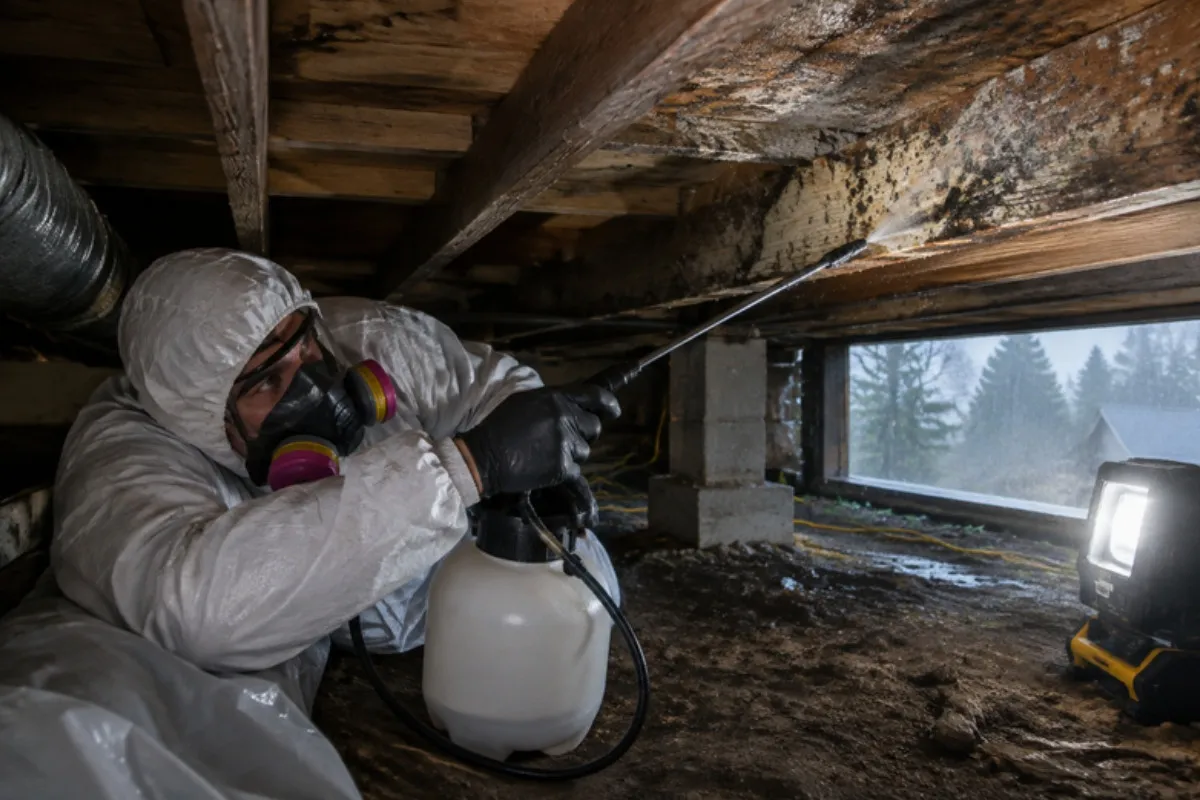
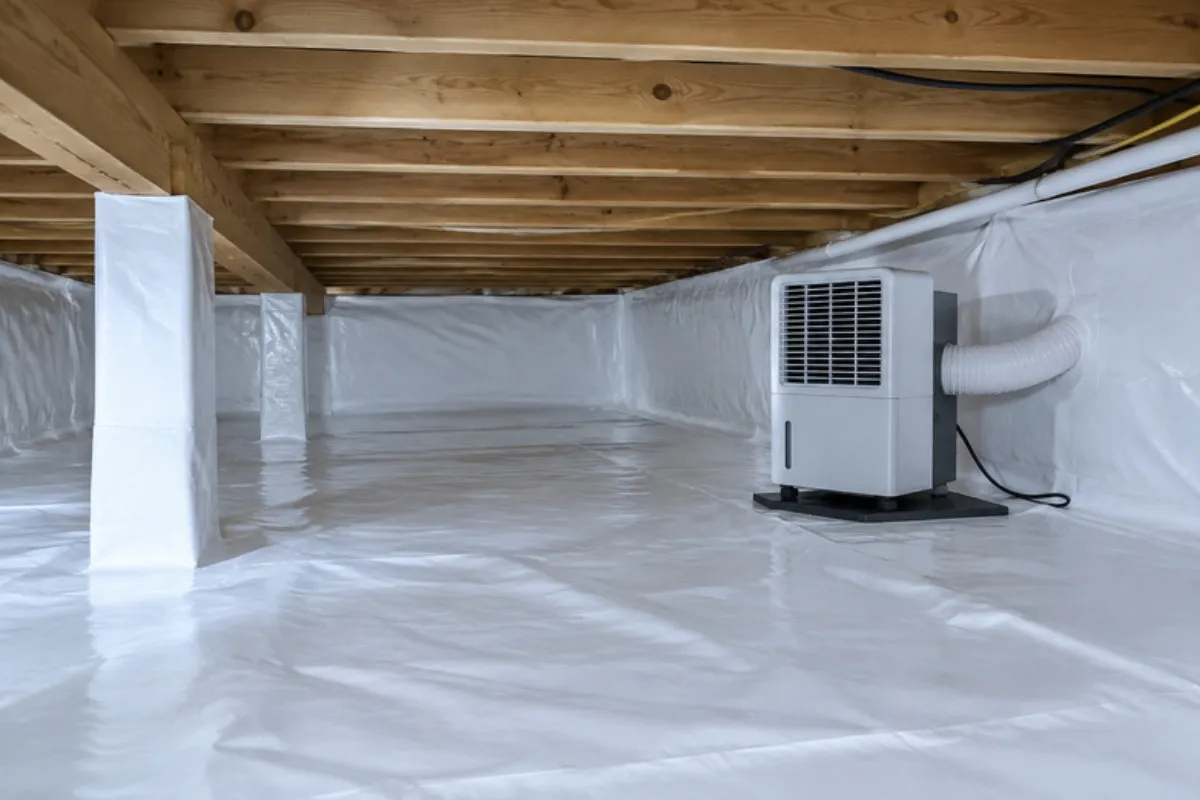
A remediation company should crawl the whole space, take moisture readings, find the source and write up a scope. Typical work includes removing wet insulation and debris, cleaning mold from the wood by scrubbing, sanding or blasting, drying the framing and laying a new sealed ground cover. Angi's Seattle cost guide lists crawl space mold work at $425 to $1,650; HomeGuide's 2026 national range is $1,500 to $4,000. Flood silt, rotted framing and drainage fixes raise the total. Washington has no state mold license or certification, so check the company's construction contractor registration on L&I's Verify a Contractor tool.
One Kent note
If cleanup reveals rotted sill plates or joists, or plumbing that needs work, ask the City of Kent what permits apply before repairs start. Keep the furnace off if its ducts run through a crawl space you suspect is contaminated, as EPA advises.
Crawl Space Mold Removal questions in Kent
What should I do after floodwater gets into the crawl space?
Will homeowners insurance pay for crawl space mold?
Should I run the furnace if ducts pass through a moldy crawl space?
What should a crawl space inspection include?
More mold services in Kent
Crawl Space Mold Removal nearby
Helpful guides
Sources
- Wikipedia: Kent, Washington
- King County: Flooding in the Green-Duwamish River watershed
- Kent Reporter: Record storage behind Howard Hanson Dam
- Washington Times: Levee fails after week of heavy rain, evacuations ordered in 3 south Seattle suburbs
- EPA: Homeowner's and Renter's Guide to Mold Cleanup After Disasters (pdf)
- EPA: Mold Cleanup in Your Home
- Angi: How Much Does Mold Remediation Cost in Seattle, WA?
- HomeGuide: How Much Does Mold Removal and Remediation Cost? (2026)
- L&I: Verify a Contractor, Tradesperson or Business
Last updated: