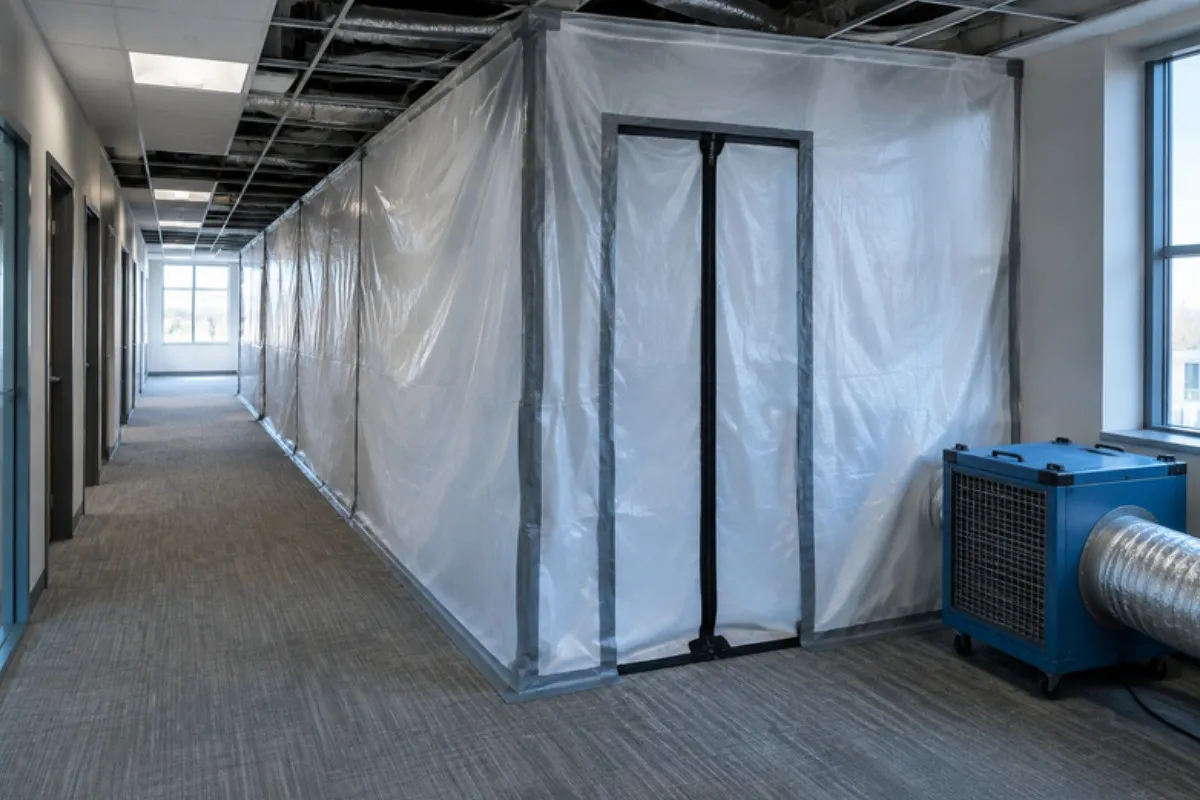
Commercial mold remediation in SeaTac means removing mold from businesses and apartment buildings while keeping dust away from occupants and shared air. A written scope, containment matched to the size of the area, and a fix for the water come first. Call the number on this page to be connected with a local mold remediation company in SeaTac.
What happens when you call
The number on this page connects SeaTac property owners and managers with an independent mold remediation company that takes commercial work in south King County. Expect questions about the building type, which floors or units are affected, whether people are still using the space, and what got wet. If the company takes the job, it schedules a site walk to trace the moisture and check ceilings, wall cavities and mechanical rooms, then puts a written scope in front of you. Nothing obligates you to hire the company you talk to.
Ask each bidder for its L&I registration and look it up on the Verify a Contractor tool. Washington has no mold license of any kind, so registration as a construction contractor is the baseline.
Cost factors on a commercial job
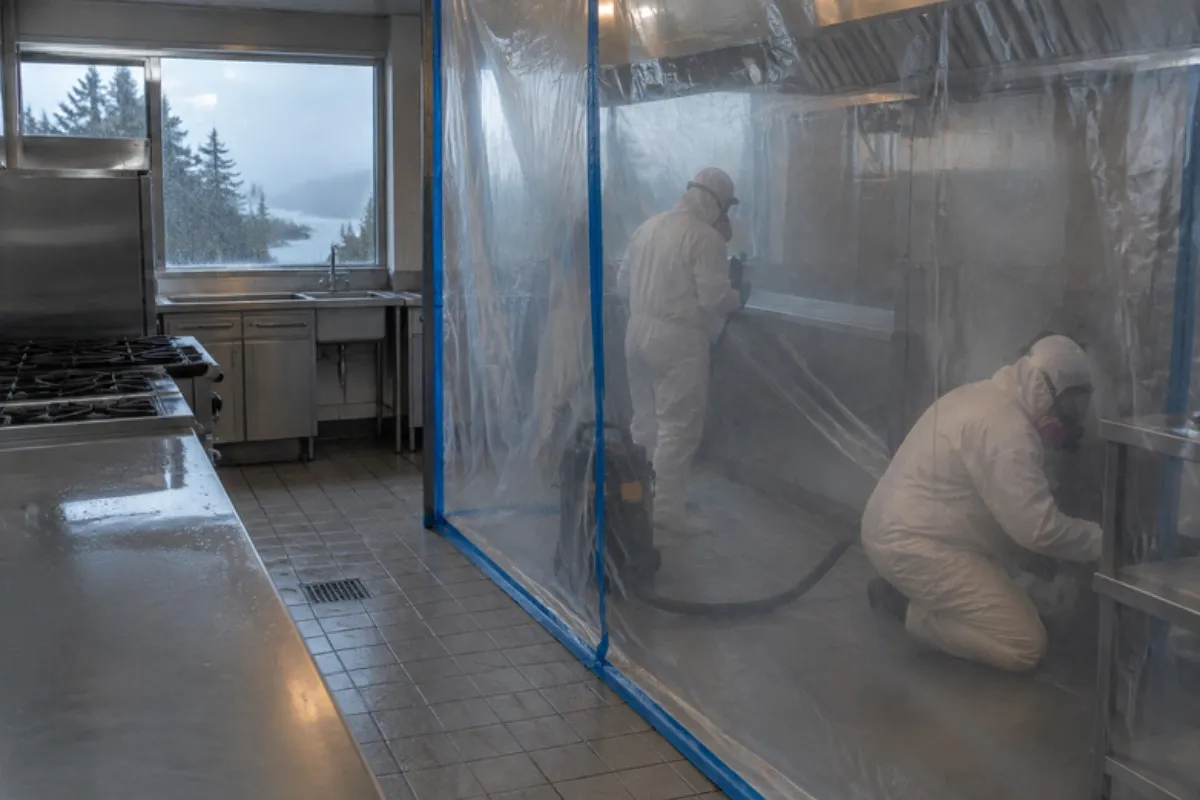
- Square footage and containment. EPA's commercial guide steps up containment as the area passes 10 and then 100 square feet.
- Working around operations. Night or weekend shifts keep a business open but add labor hours.
- Air handling. Duct or air handler cleaning is a separate line; Angi's Seattle cost guide lists $2,475 to $8,275 for HVAC work on homes, and larger systems cost more.
- Build-back. Drywall, ceiling tile, flooring and paint may or may not be in the quote.
Angi's Seattle figure of $10 to $25 per square foot comes from residential jobs, so treat it as a rough reference rather than a commercial price.
SeaTac conditions that feed mold
SeaTac sits on a plateau about 12 miles south of Seattle, between Puget Sound and the Duwamish and Green River valleys, with the airport at its center. Angle Lake and Bow Lake lie inside the city, and Miller Creek and Des Moines Creek drain the plateau. Flat roofs that pond through a long rainy stretch, wind-driven rain at storefront glass, and apartment units where winter condensation builds behind furniture are patterns seen across the region.
For apartment buildings, SeaTac Code Compliance in the Building Services Division investigates rental housing violations and enforces substandard housing codes, though tenants are expected to work through the state landlord-tenant process first. Building, plumbing or mechanical permits for repairs go through the Building Services Division.
Before the company arrives
- Pull roof, plumbing and leak records for the affected area
- Identify which HVAC unit or zone serves it, and shut it off if contamination is suspected
- Have a floor plan or rough measurements ready
- Decide who will notify tenants or staff
- Photograph the damage before anything is moved
Commercial Mold Remediation questions in SeaTac
Is there a Washington license for commercial mold remediation?
What should occupants be told before the work starts?
What does Washington law expect from landlords of apartment buildings?
What belongs in a written commercial mold bid?
More mold services in SeaTac
Commercial Mold Remediation nearby
Helpful guides
Sources
- Wikipedia: SeaTac, Washington
- City of SeaTac: Building Services Division
- City of SeaTac: Tenant resources
- EPA: Mold Remediation in Schools and Commercial Buildings (pdf)
- Angi: Mold Remediation Cost in Seattle
- Washington State Department of Health: Hiring a Contractor (indoor air)
- Washington L&I: Verify a Contractor
- Washington L&I: Hire Smart Step-by-Step
- RCW 59.18.060: Landlord duties
- RCW 59.18.070: Landlord failure to carry out duties
Last updated: