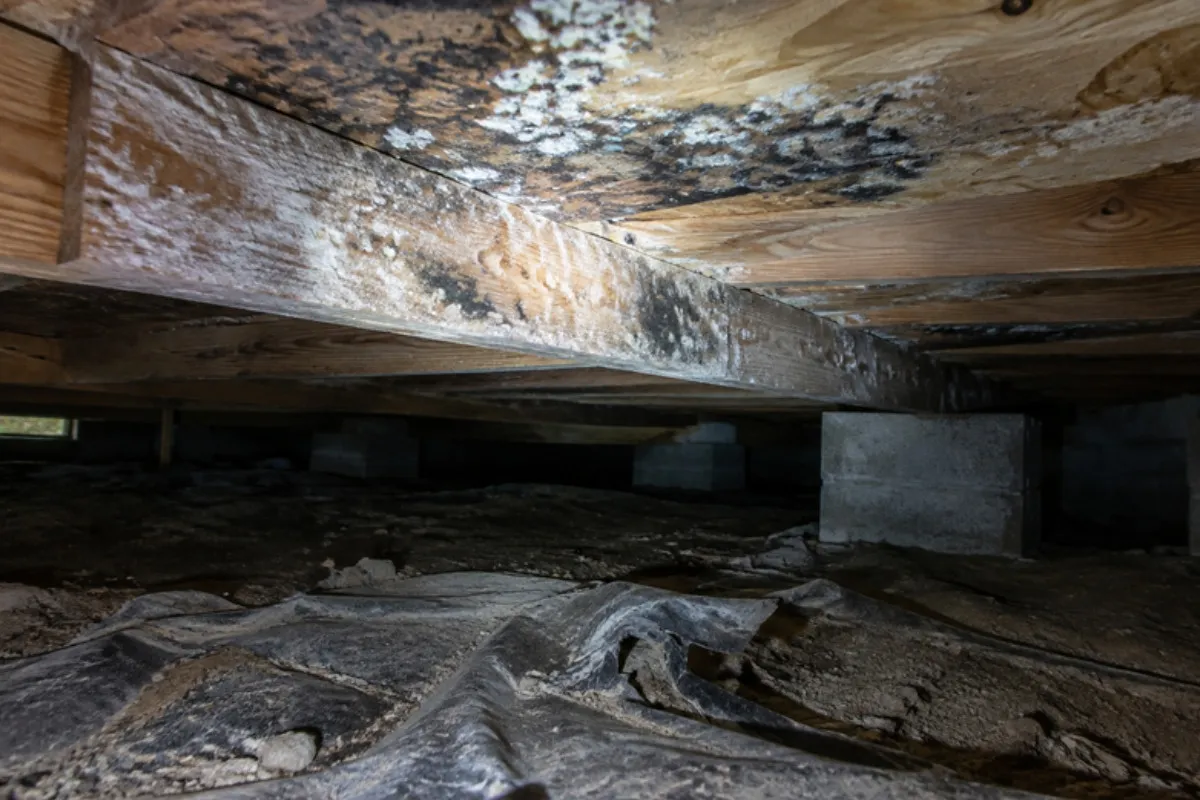
In Carnation, crawl space mold often follows the Tolt and Snoqualmie rivers, which flood seasonally in town, and the saturated ground that lingers afterward. Removal means getting the space dry, pulling soaked insulation and ground cover, and cleaning growth from the framing before anything is rebuilt. Call the number on this page to be connected with a local mold remediation company in Carnation.
Living at the confluence
Carnation is a small Snoqualmie Valley city about 20 miles east of Seattle, built where the Tolt River joins the Snoqualmie, between Duvall and Fall City. The city says both rivers flood seasonally here, with winter rain floods and spring floods driven by snowmelt and rain, and FEMA maps show the floodway plus 100-year and 500-year floodplains. The history is recent. In January 2009 a flood breached a Tolt River levee in the lower basin, and King County later bought out at-risk homes along SR 202. In December 2025 the lower Snoqualmie hit its flood of record at the Carnation gage, and SR 203 closed between the Fall City roundabout and NE Tolt Hill Road. When water fills a crawl space, it soaks the batts, lifts or buries the plastic, leaves silt behind and keeps the soil wet for weeks. Even in years without a flood, high groundwater and long rainy stretches keep many crawl spaces damp. Standard homeowner's policies do not cover flood damage, and the city's Community Rating System class earns a discount on NFIP flood policies in the Special Flood Hazard Area.
Clean it or replace it
| Material | Usually cleaned | Usually removed |
|---|---|---|
| Joists, beams, sill plates | Surface growth on sound wood is scrubbed, sanded or blasted, then dried | Wood that is soft or rotted gets replaced as a repair |
| Fiberglass insulation | Rarely | Wet or moldy batts are bagged out |
| Plastic ground cover | Not after a flood | Torn, buried or silted plastic is replaced |
| Duct wrap and flexible ducts | Hard ducts can often be cleaned | Wet, moldy wrap or flex duct usually goes |
Signs after high water
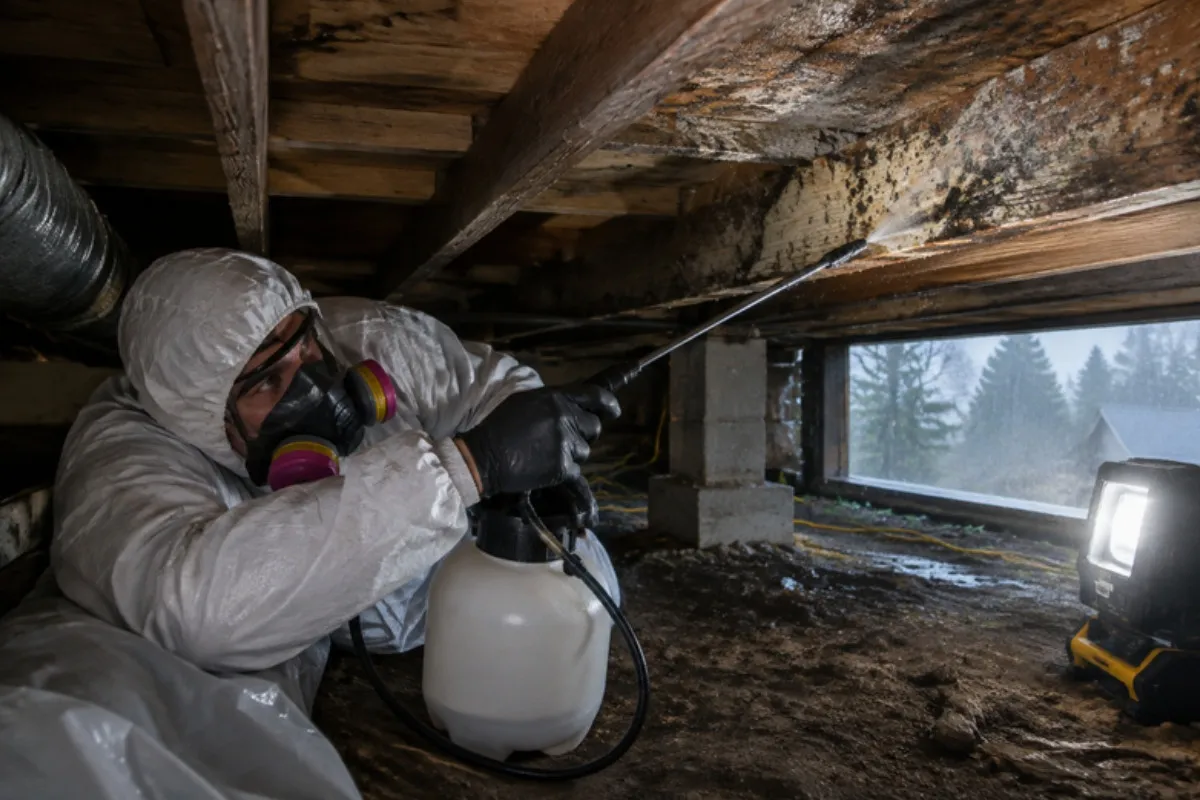
- A silt or mud line on foundation walls inside the space
- Insulation hanging heavy and wet or lying in the dirt
- A sour, musty smell in the house in the weeks after the water drops
- Growth spreading along the lowest joists and the rim board
Timing after a flood
EPA says that if a flooded home couldn't be dried within 24 to 48 hours, assume mold is growing. After river water drops, get the water out once it is safe, then let the space dry before new insulation goes in; that can take a while in a Snoqualmie Valley winter. Because floods here run from late fall into spring, many owners clean and dry first and finish restoration in drier months. Rebuilding framing or other permitted work goes through City of Carnation Planning & Permits and its Online Permit Center.
Crawl Space Mold Removal questions in Carnation
What should I do after floodwater gets into the crawl space?
Will homeowners insurance pay for crawl space mold?
Do I need a permit for repairs after crawl space mold removal?
Can I clean crawl space mold myself?
More mold services in Carnation
Crawl Space Mold Removal nearby
Helpful guides
Sources
- Wikipedia: Carnation, Washington
- City of Carnation: Flooding Information
- King County: Flooding in the Snoqualmie and South Fork Skykomish watershed
- Snoqualmie-Skykomish December 2025 Flood Overview (pdf)
- City of Carnation: Planning & Permits
- EPA: Homeowner's and Renter's Guide to Mold Cleanup After Disasters (pdf)
- EPA: Mold Cleanup in Your Home
Last updated: