Black mold in Issaquah often follows Issaquah Creek flooding into basements and ground-floor units, though leaks and condensation cause plenty of it too. Removal means drying the structure, cutting out soaked drywall and insulation, cleaning the framing and fixing the water problem. Call the number on this page to be connected with a local mold remediation company in Issaquah.
Signs to look for
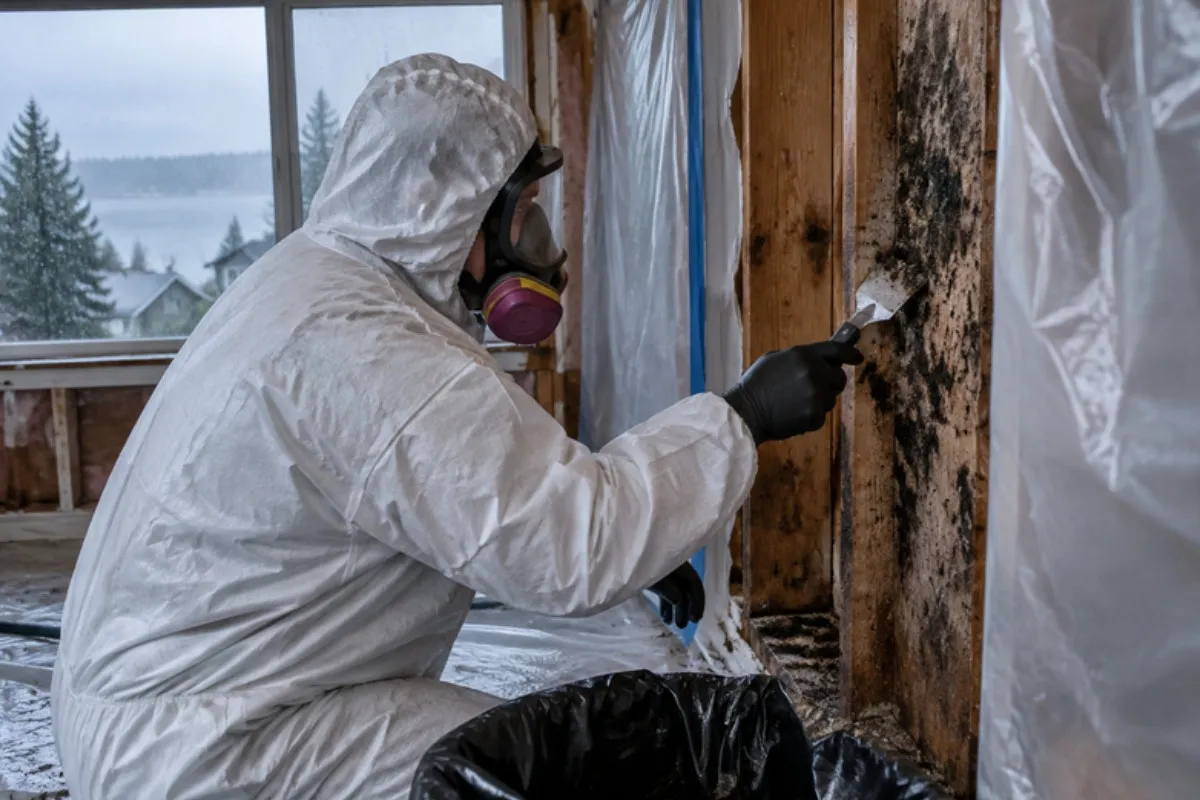
- Black or dark green spotting on the bottom foot or two of drywall in a basement or ground-floor unit
- Carpet pad that stays damp or smells sour weeks after water was pulled up
- Dark growth on the back of baseboards or the underside of cabinets when you pull them
- Specks on a bathroom ceiling in a newer, tightly built home with a fan nobody runs
- An earthy odor in a closet or storage room near the creek side of the house
Why Issaquah homes get it
Issaquah sits at the south end of Lake Sammamish, about 16 miles east of Seattle, ringed by the Issaquah Alps. Issaquah Creek and its East Fork run through the city, including downtown, and King County treats the creek corridor as an urban flood hazard area. The record is recent. In February 2020, more than 200 people were evacuated from three flooded apartment complexes, and water reached Gilman Village, backyards, basements and first-floor condos. In January 2022, snowmelt and heavy rain pushed the creek into Old Town and along Front Street North, and the East Fork overflowed at NE Dogwood Street. The city opened a cleanup page after the December 2025 flooding, with cleanup kits at the Issaquah Community Center and a referral to Crisis Cleanup for volunteer help that included mold mitigation.
The median home here was built around 2002. Newer construction is tight, so shower steam and cooking moisture linger unless fans run, and dark growth on bathroom ceilings and window frames is common even far from the creek.
Cost and permits
Angi's Seattle cost guide reports a typical remediation job at $1,008 to $2,967 and basement work at $425 to $2,475. Flood jobs climb when walls are opened, insulation is replaced and flooring comes up. The city says replacing drywall and insulation after flooding needs a building permit through Community Planning & Development, and it publishes a Flood Damage Permit Guide, so build that into your plan.
What to expect when you call
The number on this page connects you with an independent local mold remediation company. Tell them whether creek water was involved and how long it sat. Expect moisture readings, a written scope and an honest answer about what can be cleaned versus cut out. Washington has no state mold license or certification, so check the company's registration with Washington L&I as a construction contractor on L&I's Verify tool.
Black Mold Removal questions in Issaquah
Floodwater got into my house. Should I assume black mold?
Do I need a permit to replace drywall after black mold is removed?
How long does black mold removal usually take?
Can I clean a small patch of black mold myself?
More mold services in Issaquah
Black Mold Removal nearby
Sources
- Wikipedia: Issaquah, Washington
- KVAL: 200 people evacuated from 3 Issaquah apartments after major flooding
- KOMO: Issaquah Creek overflows banks
- City of Issaquah: December 2025 Flooding
- City-Data: Issaquah, WA houses
- Angi: How Much Does Mold Remediation Cost in Seattle, WA?
- L&I: Verify a Contractor, Tradesperson or Business
- EPA: Homeowner's and Renter's Guide to Mold Cleanup After Disasters (pdf)
- EPA: Mold Cleanup in Your Home
Last updated: