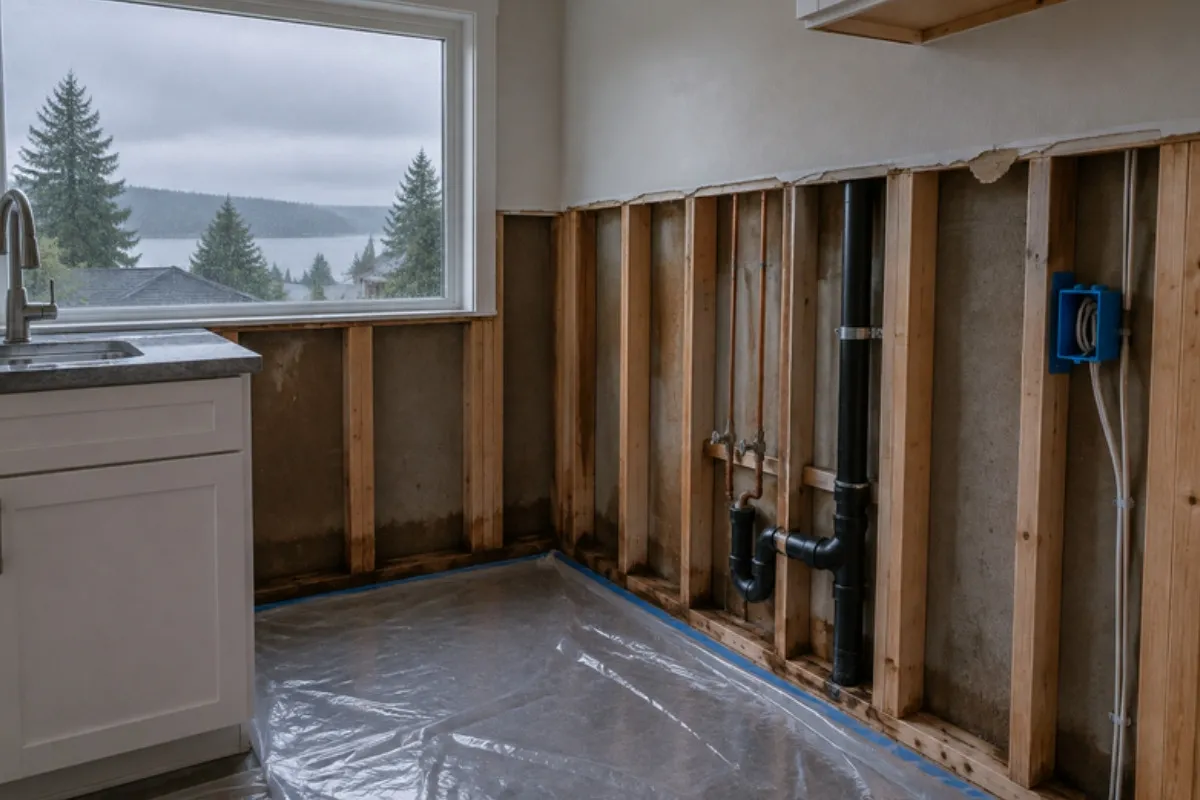
Issaquah walls usually grow mold after Issaquah Creek floods ground floors near the creek, or from leaks and condensation in homes elsewhere in town. Wet drywall and insulation are cut out, framing is cleaned and dried, and the city requires a building permit to replace drywall and insulation. Call the number on this page to be connected with a local mold remediation company in Issaquah.
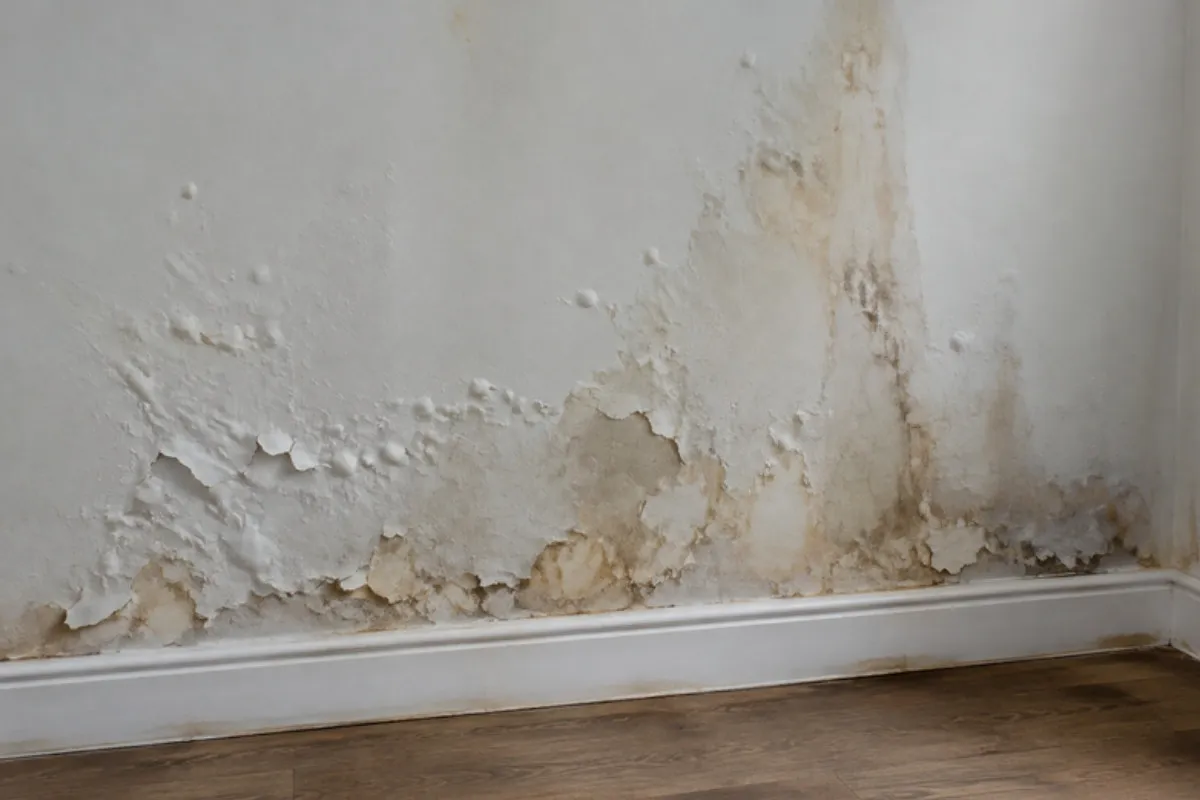
Signs of mold behind Issaquah drywall
- A line of discoloration across the lower wall after the creek came up
- Baseboards and door trim that swelled, split or came loose
- A heavy, musty odor in a ground-floor condo or apartment that won't air out
- Paint that has blistered in patches or feels damp to the touch
- Gaps opening along the floor where drywall has softened
Why walls get wet in Issaquah
Issaquah sits at the south end of Lake Sammamish, about 16 miles east of Seattle, with Issaquah Creek and its East Fork running right through downtown. King County calls the creek an urban flood hazard area, and the city tracks it with a flood phase chart tied to an upstream gauge at Hobart. The creek has flooded several times in recent years. In February 2020 Eastside Fire evacuated more than 200 people from three flooded apartment complexes, and water reached Gilman Village, backyards, basements and first-floor condos. In January 2022 snowmelt and heavy rain sent the creek over its banks in Old Town and along Front Street North, and the East Fork overflowed at NE Dogwood Street. After more flooding in December 2025, the city put up a page with cleanup guidance.
The median Issaquah home was built around 2002, so plenty of houses, including many in Issaquah Highlands, are newer. Newer walls still get wet from leaking supply lines, window installs and condensation, and tight construction can make a soaked cavity slow to dry.
Cost and permits
Angi's Seattle cost guide reports about $825 to $16,550 for mold in walls, with drywall replacement around $825 to $2,400. A flooded ground floor with wet insulation along every exterior wall sits at the high end; one wall behind a leaking dishwasher sits near the low end. Issaquah is explicit that replacing drywall and insulation needs a building permit through Community Planning & Development, and the city publishes a Flood Damage Permit Guide for post-flood repairs.
What happens when you call
Calling connects you with an independent local remediation company; this site doesn't do the work itself. Tell the company whether creek water came inside, how high it reached and how long it stood. Expect moisture mapping before cutting, containment around the work area and a written scope. Washington has no state mold license or certification, so confirm the company is registered with Washington L&I as a construction contractor using L&I's Verify a Contractor tool. Renters should know the city's Code Enforcement Division handles dangerous or substandard buildings but doesn't enforce landlord-tenant issues.
Mold in Walls & Drywall questions in Issaquah
What should I do with walls that got wet in a flood?
Do I need a permit to replace drywall after mold removal?
Does the insulation have to come out too?
Will the mold come back after the wall is rebuilt?
More mold services in Issaquah
Mold in Walls & Drywall nearby
Helpful guides
Sources
- Wikipedia: Issaquah, Washington
- King County: Flooding in the Sammamish watershed
- KVAL: 200 people evacuated from 3 Issaquah apartments after major flooding
- KOMO: Issaquah Creek overflows banks
- City of Issaquah: December 2025 Flooding
- City-Data: Issaquah, WA houses
- City of Issaquah: Code Enforcement
- Angi: How Much Does Mold Remediation Cost in Seattle, WA?
- L&I: Verify a Contractor, Tradesperson or Business
- EPA: Homeowner's and Renter's Guide to Mold Cleanup After Disasters (pdf)
Last updated: