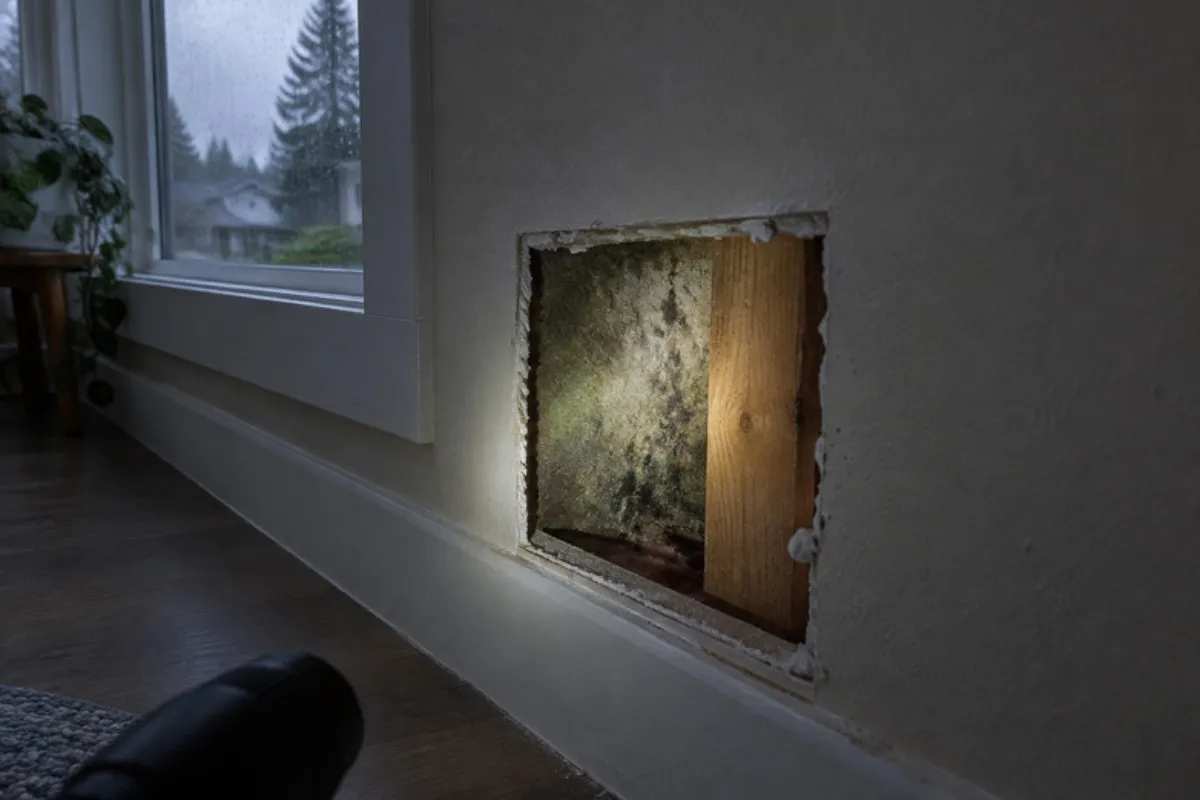
Monroe walls get moldy from river flooding along the Skykomish and Woods Creek edges of town, and from the everyday leaks and condensation every Puget Sound home faces. Soaked drywall and insulation usually have to come out, with the framing cleaned and dried before rebuilding. Call the number on this page to be connected with a local mold remediation company in Monroe.
Monroe conditions
Monroe sits at the eastern end of the Snohomish River floodplain, where the Skykomish and Snoqualmie rivers join. The Skykomish forms the city's southern boundary and Woods Creek its eastern edge, and the south and east edges along the Skykomish fall within a 100-year flood hazard zone. In the December 2025 atmospheric river flooding, water over the pavement closed roads near Monroe, a Monroe mobile home park was evacuated, and drivers got stuck in floodwater on back roads and city streets. After those floods, the Snohomish County Health Department warned that mold begins forming within one to two days and advised N95 masks, waterproof boots and heavy gloves for cleanup. Away from the river, wall mold follows the usual pattern: leaks at plumbing walls, rain past windows and winter condensation.
Save it or replace it?
| Material | After a brief clean-water leak, dried fast | After floodwater or a long leak |
|---|---|---|
| Drywall | Sometimes kept if firm and dry within 48 hours | Usually cut out above the wet line |
| Fiberglass insulation | Often replaced anyway | Replaced |
| Wood studs | Dried and checked | Cleaned, dried and checked; rotted pieces replaced |
| Baseboard and trim | Reused if not swollen | Often replaced |
Signs
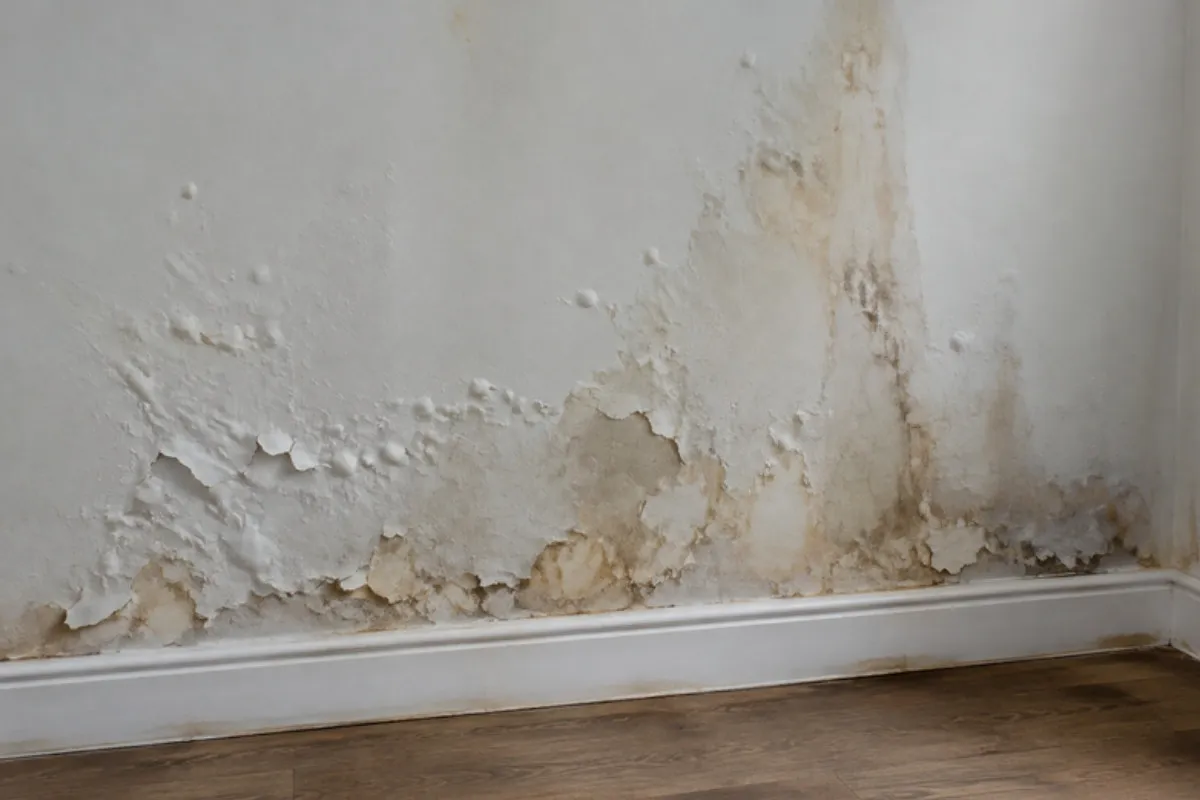
- A water line left on drywall after high water
- Wallpaper or paint lifting at the bottom of a wall
- A persistent damp smell even after floors are dry
- Spots appearing on the face of drywall weeks after a leak
- Doors or trim on an outside wall that stick or swell through the winter
- Condensation beading on the inside of windows above a stained sill
Timing
Speed matters. EPA says to assume mold growth when a flooded home could not be dried within 24 to 48 hours, and Monroe winters rarely dry anything on their own. Get wet drywall and insulation out first, let the cavities dry with heat and air movement, confirm dry readings with a meter, then rebuild. Closing a wall too soon is one of the most common reasons mold comes back. The City of Monroe Permit Center at City Hall, 806 W. Main St. (360-863-4501), handles building permits if framing, electrical or plumbing repairs are part of the rebuild. Snohomish County adopted updated FEMA flood insurance rate maps in June 2020, so check where your property falls before major post-flood work.
Mold in Walls & Drywall questions in Monroe
Floodwater soaked the lower part of my walls. What has to come out?
Does wet insulation inside the wall have to be replaced?
Will homeowners insurance pay for mold in my walls?
How long will the wall be open?
More mold services in Monroe
Mold in Walls & Drywall nearby
Helpful guides
Sources
- Wikipedia: Monroe, Washington
- Snohomish County: flood emergency proclamation news release (Dec. 9, 2025)
- Snohomish County Health Department: mold advisory after the December 2025 floods
- EPA: Homeowner's and Renter's Guide to Mold Cleanup After Disasters (pdf)
- City of Monroe: Permitting
- Snohomish County: Mapping the Flood Risk
Last updated: