Monroe sits where the Skykomish and Snoqualmie rivers join, and its south and east edges lie in a 100-year flood hazard zone, so mold work here often follows high water. Remediation dries the structure, removes what cannot be saved and cleans the rest. Call the number on this page to be connected with a local mold remediation company in Monroe.
Local conditions in Monroe
Monroe is a Cascade foothills city on US 2, about 27 miles from Seattle, at the head of the Snohomish River floodplain. The Skykomish forms the southern city boundary and Woods Creek the eastern, and the edges along the Skykomish are inside a 100-year flood hazard zone. Snohomish County adopted updated FEMA digital flood maps in June 2020. In the December 2025 atmospheric river flooding, water over the pavement closed roads near Monroe, a mobile home park was evacuated, and drivers got stuck in floodwater on back roads and city streets. Afterward, the Snohomish County Health Department warned that mold begins forming within one to two days and advised N95 masks, waterproof boots and heavy gloves for cleanup.
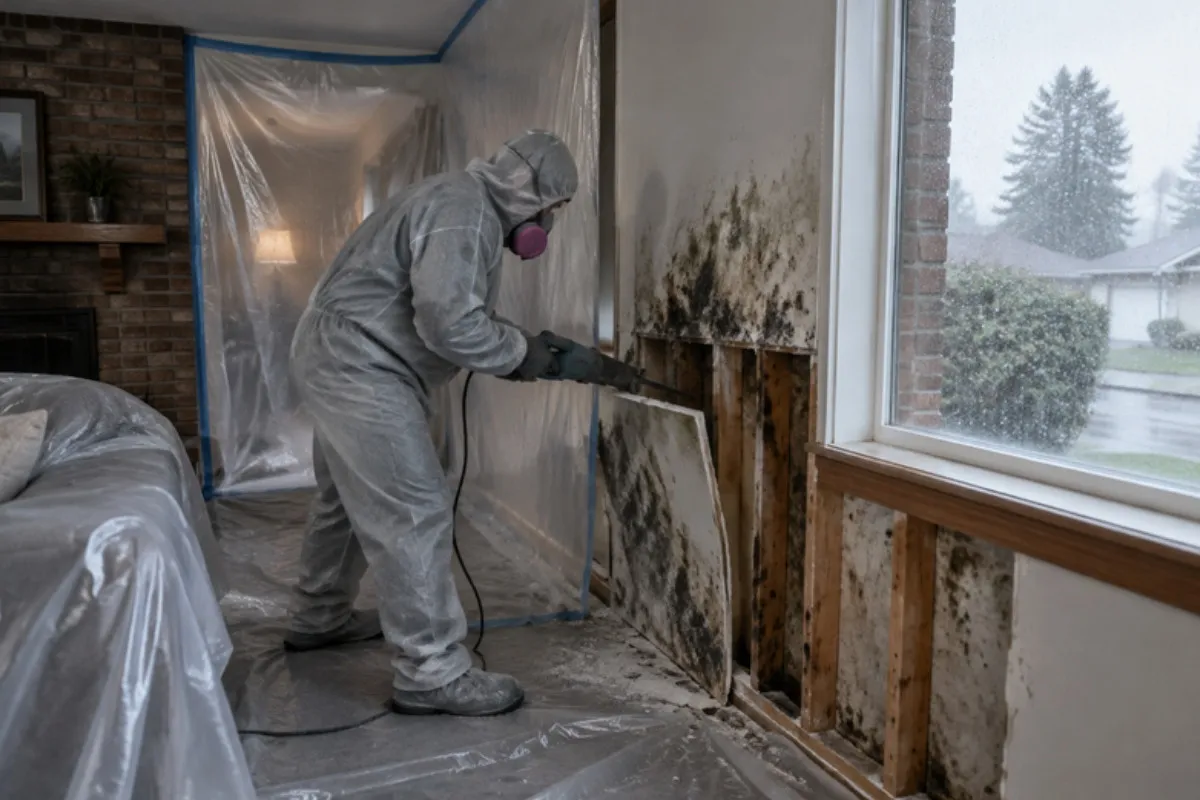
What stays and what goes
| Material | After flood water | After a clean-water leak caught early |
|---|---|---|
| Drywall | Cut out above the water line | May be dried in place if it is firm and dries fast |
| Fiberglass insulation | Removed and bagged | Usually replaced if soaked |
| Carpet and pad | Thrown away | Pad replaced; carpet sometimes cleaned |
| Wood framing | Cleaned, disinfected and dried | Dried and cleaned |
| Crawl space vapor barrier | Replaced | Repaired or replaced |
EPA says porous materials that grew mold may have to be thrown away, and painting over mold does not fix it. Flood mud can also carry contaminants, so anything it touched needs cleaning and disinfecting, not just drying. A remediation company should show you moisture readings before new insulation or drywall goes in.
Signs to look for
- A smell like wet earth coming from floor vents
- Mud lines or staining on lower walls and cabinet bases
- Cupped or buckled flooring
- Spotting on stored belongings in a garage or outbuilding
- Condensation and black specks on windows in winter
Timing
Speed matters most after a flood. Start drying within 24 to 48 hours if you can safely get in, and keep children out of the cleanup, as EPA advises. Photograph damage before anything is removed. Remediation companies are busiest right after big floods, so getting on a schedule early helps. When walls or structure are rebuilt, the City of Monroe Building Division at the Permit Center in City Hall handles building permits. Washington has no mold license, so check that the company is registered with L&I as a construction contractor before you sign.
Mold Removal & Remediation questions in Monroe
Can a flooded home be cleaned up without mold growing?
What can a renter do about mold the landlord won't fix?
How long does mold remediation take?
Should I run the furnace while mold is being removed?
More mold services in Monroe
Mold Removal & Remediation nearby
Helpful guides
Sources
- Wikipedia: Monroe, Washington
- Snohomish County: Mapping the Flood Risk
- Snohomish County: flood emergency proclamation news release (Dec. 9, 2025)
- Snoho.com: Snohomish River flood tops record level
- Snohomish County Health Department: mold advisory after the December 2025 floods
- City of Monroe: Permitting
- City of Monroe: Code Enforcement
- EPA: Homeowner's and Renter's Guide to Mold Cleanup After Disasters (pdf)
- EPA: Mold Cleanup in Your Home
- RCW 59.18.070: Landlord failure to carry out duties
Last updated: