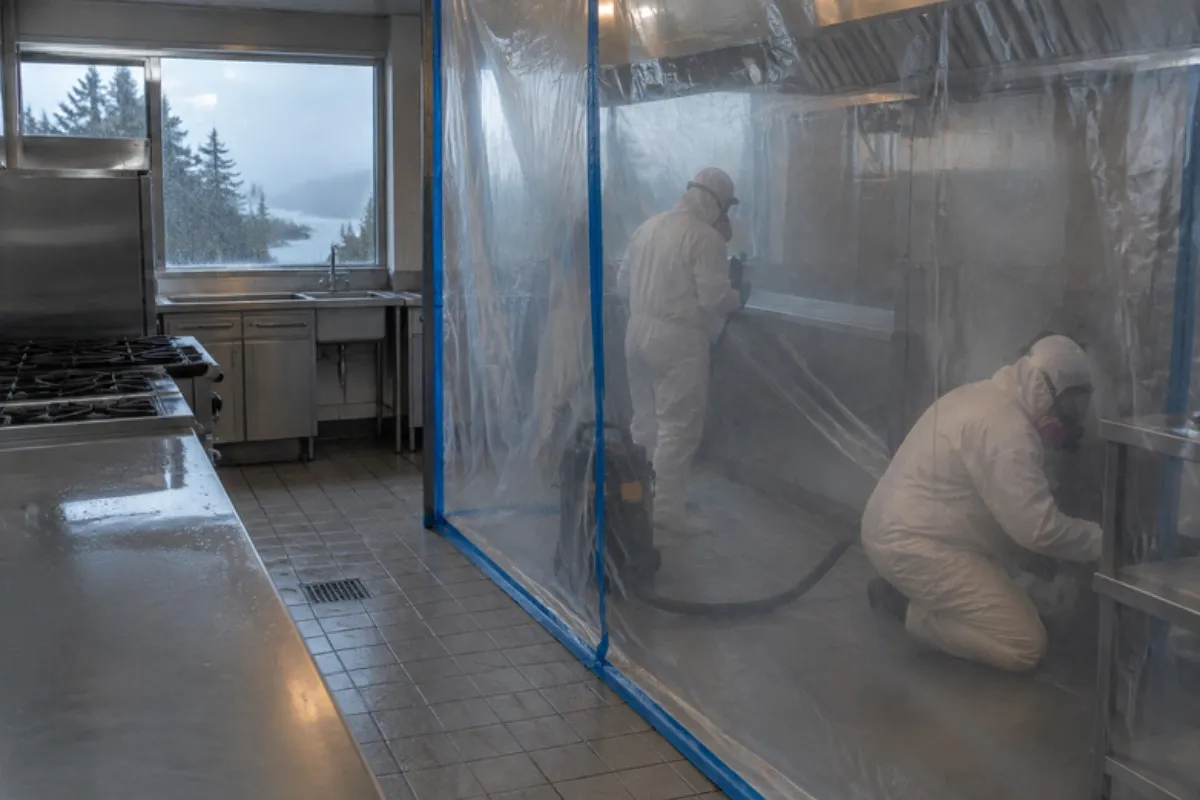
Commercial mold remediation in Snoqualmie is often flood work: downtown sits mostly within the Snoqualmie River floodplain, and soaked drywall, insulation and flooring grow mold quickly. A remediation company removes what cannot be saved inside sealed work areas and leaves the building ready to dry and rebuild. Call the number on this page to be connected with a local mold remediation company in Snoqualmie.
River water reached our downtown building. What comes out first?
The city describes most of downtown Snoqualmie as lying within the Snoqualmie River floodplain, and floodwater collects on the flat valley floor while Kimball Creek backs up when the river is high. The November 1990 flood was the worst in the city's known history, the January 2009 flood was the last major one for years, and the December 2025 atmospheric river pushed the river near Snoqualmie to roughly 70,000 cubic feet per second, just below the 1990 peak. After water like that, EPA's disaster guide says to assume mold is growing if the building could not be dried within 24 to 48 hours. Wet drywall, insulation, carpet and ceiling tile generally come out; framing and hard surfaces are cleaned and dried. The city also warns that flood mud can carry sewage and chemicals, so everything that got wet needs cleaning and disinfecting, and crews should wear at least an N-95 respirator.
Will insurance cover the cleanup?
That depends on the policy. Snoqualmie's own flood guidance points out that standard homeowner's policies do not cover flood damage, and many commercial property policies treat flood separately as well. Call the carrier before demolition, photograph each room, and ask the remediation company for a written scope and moisture readings the adjuster can use. The city counts 373 properties in four repetitive-loss areas, mostly over basements and crawl spaces, so repeat claims are common here.
Who handles permits for the rebuild?
The Building Division of the City of Snoqualmie Community Development Department issues building permits, from its office on SE River Street. Removing moldy material is not usually permitted work, but replacing walls, electrical or mechanical systems often is. Owners in the floodplain should ask about elevation and substantial-improvement rules before rebuilding; the city notes that elevating homes has been the most common way houses here are protected.

One more Snoqualmie note
Even buildings that stayed dry deal with long valley winters. Musty back rooms, stained ceiling tiles under roof drains and condensation on cold walls are worth handling before they spread, and the moisture has to be fixed first.
Commercial Mold Remediation questions in Snoqualmie
What happens to a commercial space that took on floodwater?
Will commercial property insurance pay for mold cleanup?
Should the building's heating and ventilation keep running?
How do we know the commercial cleanup is finished?
More mold services in Snoqualmie
Commercial Mold Remediation nearby
Helpful guides
Sources
- City of Snoqualmie: 2023-2024 Flood Report
- City of Snoqualmie: 2024 Repetitive Loss Area Analysis (draft)
- King County: Snoqualmie-Skykomish December 2025 flood overview
- City of Snoqualmie: Building Division
- EPA: Homeowner's and Renter's Guide to Mold Cleanup After Disasters (pdf)
- EPA: Mold Cleanup in Your Home
Last updated: