Basement mold in Auburn usually traces to one of two things: river water on the valley floor or a long wet season pressing groundwater against foundation walls up on the hills. Removal means fixing the source, taking out moldy drywall, carpet and insulation, and cleaning and drying what stays. Call the number on this page to be connected with a local mold remediation company in Auburn.
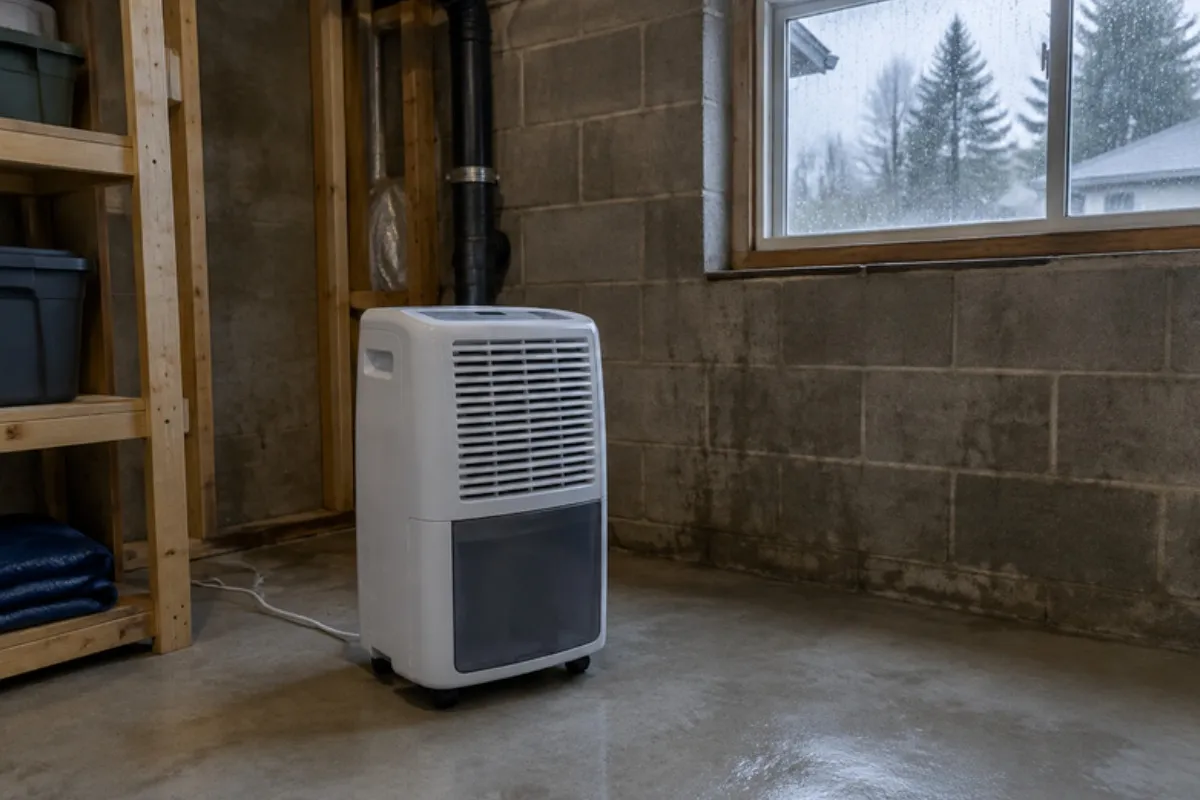
Signs your Auburn basement has a mold problem
- A stale, earthy smell at the bottom of the stairs that clings to stored clothing and boxes
- Gray, green or black speckling low on drywall, baseboards or the backs of shelving units
- Carpet that feels cool and damp, or a pad that smells sour when you lift a corner
- Water stains or a tide line on the foundation wall after heavy rain
- Peeling paint or white crusty deposits on bare concrete, which point to water moving through the wall
What makes Auburn basements damp
Auburn sits about 22 miles south of Seattle, mostly in King County with a small piece in Pierce. The valley floor follows the Green and White rivers, and parts of the city lie in FEMA-regulated floodplain. Mud Mountain and Howard A. Hanson dams ended the frequent floods of the city's early years, but not every high-water event. On Dec. 13, 2025 the Green River at Auburn reached 68.7 feet, and two days later King County ordered evacuations in parts of Auburn, Kent and Tukwila after a levee failed. A finished lower level that took on water that month can still hide insulation and drywall that never fully dried.
On Lea Hill, West Hill and in Lakeland Hills, which crosses into Pierce County, the cause tends to be slower: groundwater pushing on a below-grade wall through the rainy months, downspouts emptying beside the foundation, and condensation on cold concrete in winter. Age plays a part too. In ZIP code 98001, which covers part of Auburn plus some nearby areas, about 41 percent of houses were built in 1979 or earlier, old enough that original drainage and waterproofing may be worn out.
Cost drivers for basement work
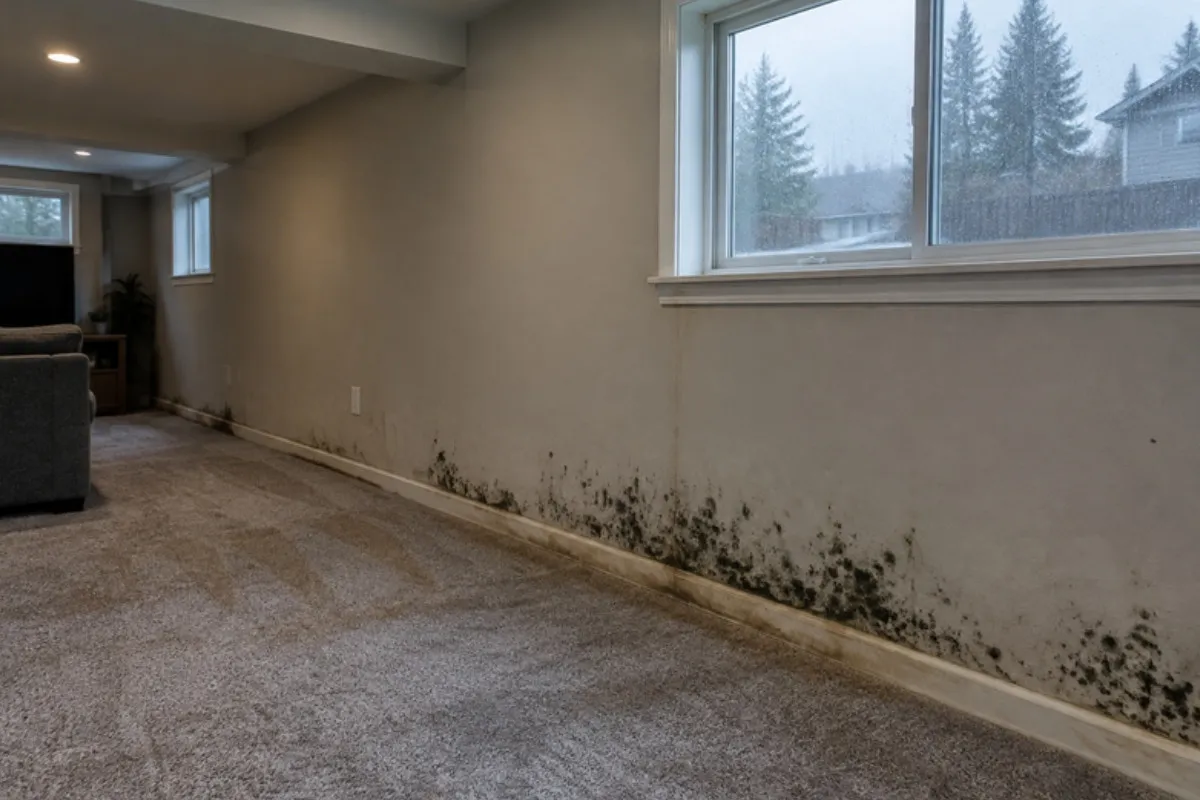
Angi's Seattle cost guide lists basement mold remediation at $425 to $2,475, and HomeGuide's 2026 national ranges run $1,500 to $6,000 for partial work and $6,000 to $15,000 for a full basement. An unfinished space with growth on a few studs sits near the low end. A finished family room where drywall, carpet, pad and insulation all come out, with containment and drying equipment, costs far more. Rebuilding inside the regulated floodplain may require a City Floodplain Development Permit, so check with Development Engineering before new walls go up.
What happens when you call
The number on this page connects you with an independent local remediation company; this site doesn't do the work itself. Be ready to say whether river water came in, whether a leak is still active, and roughly how much of the basement is finished. A good visit includes moisture readings along the walls and floor, a look at outside grading and downspouts, and a written scope. Washington has no state mold license or certification, so check that the company is registered with Washington L&I as a construction contractor on L&I's Verify a Contractor tool.
Basement Mold Removal questions in Auburn
What should I do after floodwater gets into the basement?
Will homeowners insurance pay for basement mold?
Do I need a permit to rebuild after basement mold removal?
Is the white powder on my basement wall mold?
More mold services in Auburn
Basement Mold Removal nearby
Helpful guides
Sources
- Wikipedia: Auburn, Washington
- City of Auburn: Floodplain Management and Flood Information
- Washington Times: Levee fails after week of heavy rain, evacuations ordered in 3 south Seattle suburbs
- City-Data: ZIP 98001 housing
- Angi: How Much Does Mold Remediation Cost in Seattle, WA?
- HomeGuide: How Much Does Mold Removal and Remediation Cost? (2026)
- L&I: Verify a Contractor, Tradesperson or Business
- EPA: Homeowner's and Renter's Guide to Mold Cleanup After Disasters (pdf)
- EPA: Mold Cleanup in Your Home
Last updated: