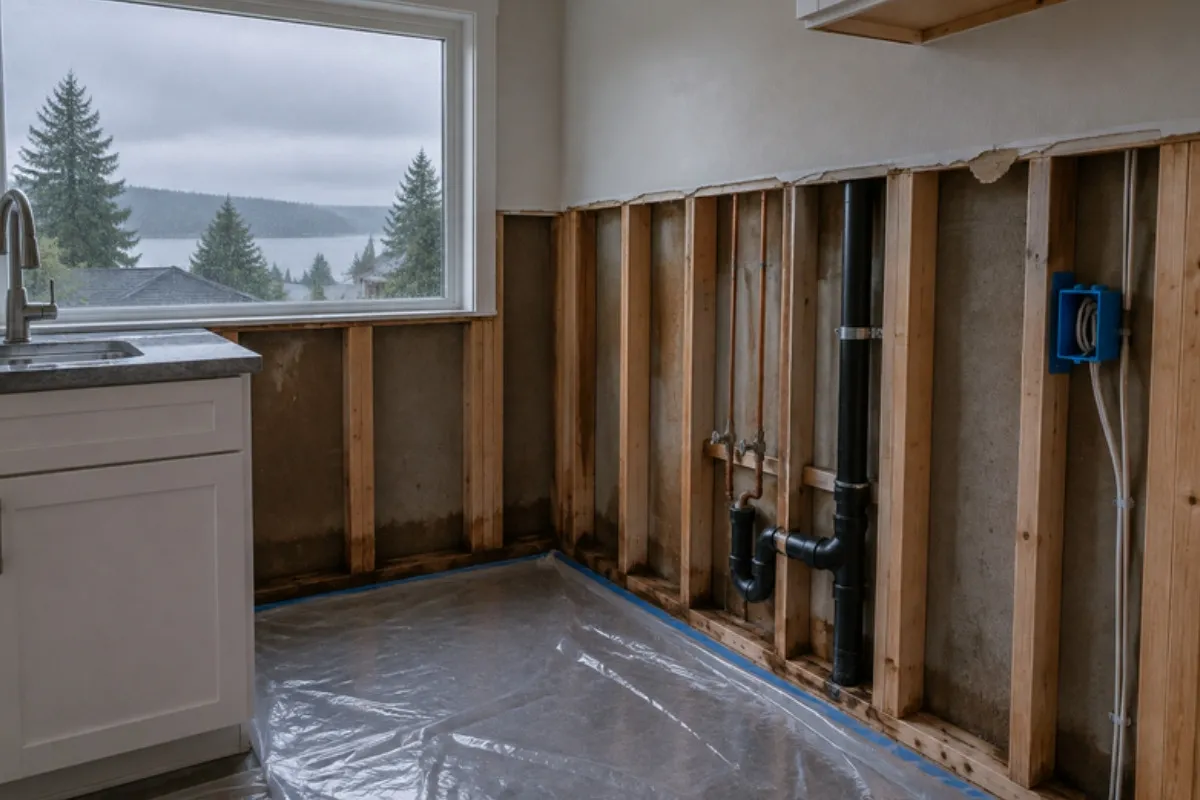
Mold inside Auburn walls usually follows water: river flooding on the valley floor, or a plumbing leak, window leak or winter condensation up on the hills. Wet drywall and insulation generally have to be cut out, the framing cleaned and dried, and the source fixed before the wall is closed. Call the number on this page to be connected with a local mold remediation company in Auburn.
Signs the problem is inside an Auburn wall
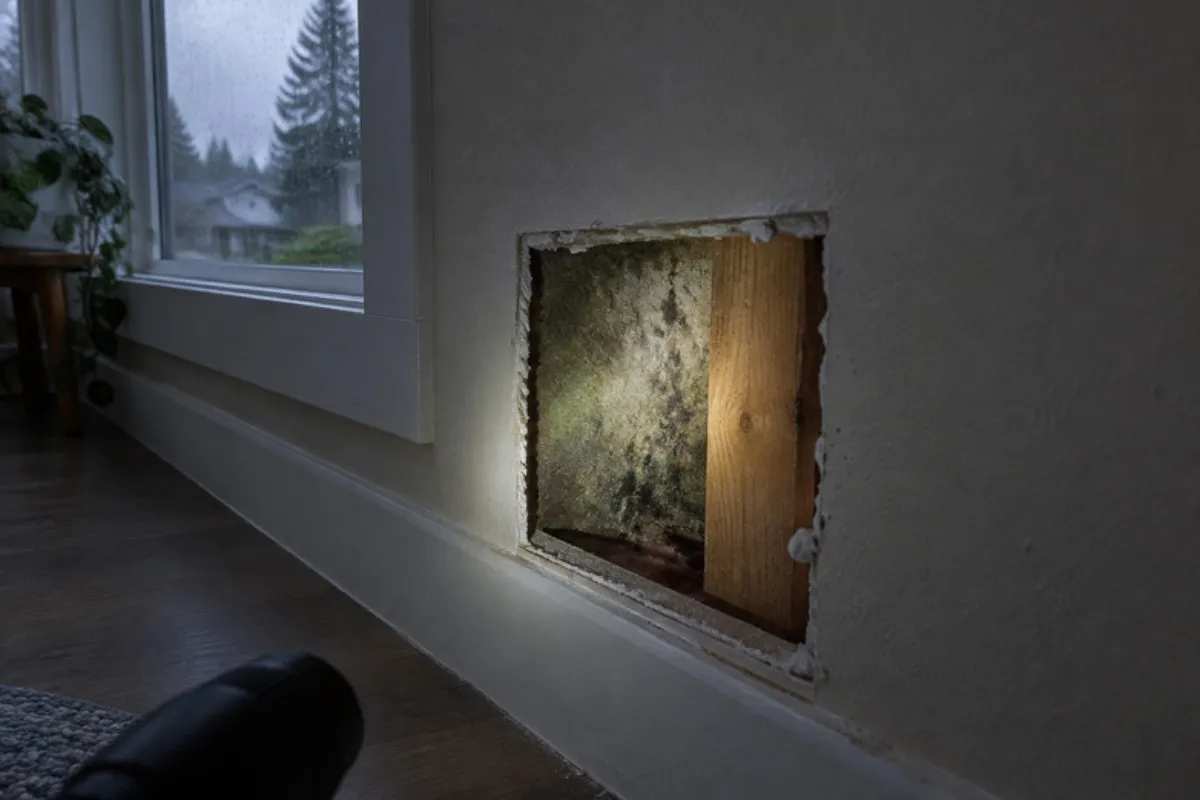
- A damp, earthy odor strongest in one room or along one wall that lingers after you air the room out
- Paint blistering low on the wall, or a brown line partway up the drywall where water once stood
- Baseboards that have swollen, split at the joints or pulled away from the floor
- Drywall that gives a little when you press it, or feels cold and clammy
- Spotting that keeps returning in the same corner no matter how often it is wiped
Why Auburn walls get wet
Auburn is about 22 miles south of Seattle, mostly in King County with a small slice in Pierce. The valley floor follows the Green and White rivers, and the city has FEMA-regulated floodplain inside its limits. Mud Mountain and Howard A. Hanson dams tamed the frequent floods of Auburn's early years, but they don't stop every high-water event. In December 2025 the Green River at Auburn hit 68.7 feet on the 13th, and on the 15th King County ordered evacuations in parts of Auburn, Kent and Tukwila after a levee failed. When floodwater sits against a wall, drywall wicks it upward and the insulation behind it soaks through well above the visible line, and a cavity closed up before it dried can grow mold for months.
Away from the river, on Lea Hill, West Hill and in Lakeland Hills, wall mold more often starts with a slow plumbing leak, a window letting rain past the flashing, or condensation on an exterior wall during the long wet season. In ZIP code 98001, which covers part of Auburn and some surrounding area, about 41 percent of houses were built in 1979 or earlier, so original plumbing and window seals in older homes deserve a look.
What sets the price
Angi's Seattle cost guide reports wall mold jobs between about $825 and $16,550, a spread that reflects the gap between one bathroom wall and a whole flooded lower floor. Putting drywall back afterward runs roughly $825 to $2,400 in the same guide. The biggest variables are how many feet of wall get opened, whether insulation and sheathing are affected, and how much containment the job needs. Repairs inside the regulated floodplain may need a City Floodplain Development Permit through Development Engineering.
What happens when you call
The number on this page connects you with an independent local remediation company; this site doesn't do the work. Tell them whether river water reached the house, whether a leak is still active, and which walls smell or look wrong. Expect moisture readings before any cutting, a written scope, and a plan for who fixes the water source. Washington has no state mold license or certification, so check that the company is registered with Washington L&I as a construction contractor on L&I's Verify a Contractor tool.
Mold in Walls & Drywall questions in Auburn
What should I do with walls that got wet in a flood?
Do I need a permit to replace drywall after mold removal?
How do companies find mold behind drywall without tearing out the whole wall?
Will homeowners insurance cover mold inside a wall?
More mold services in Auburn
Mold in Walls & Drywall nearby
Helpful guides
Sources
- Wikipedia: Auburn, Washington
- City of Auburn: Floodplain Management and Flood Information
- Washington Times: Levee fails after week of heavy rain, evacuations ordered in 3 south Seattle suburbs
- City-Data: ZIP 98001 housing
- Angi: How Much Does Mold Remediation Cost in Seattle, WA?
- L&I: Verify a Contractor, Tradesperson or Business
- EPA: Homeowner's and Renter's Guide to Mold Cleanup After Disasters (pdf)
Last updated: